




|
Exodus
27:1-21 “And thou shalt make an altar of
shittim wood, five cubits long, and five cubits broad; the altar shall be
foursquare: and the height thereof shall
be three cubits. 2 And thou shalt make
the horns of it upon the four corners thereof:
his horns shall be of the same:
and thou shalt overlay it with brass. 3
And
thou shalt make his pans to receive his ashes, and his shovels, and his basons,
and his fleshhooks, and his firepans:
all the vessels thereof thou shalt make of brass. 4
And
thou shalt make for it a grate of network of brass; and upon the net
shalt thou make four brazen rings in the four corners thereof. 5
And
thou shalt put it under the compass of the alter beneath, that the net may be
even to the midst of the alter. 6
And
thou shalt make staves for the altar, staves of shittim wood, and
overlay them with brass. 7 And the staves shall
be put into rings, and the staves shall be upon the two sides of the altar, to
bear it. 8 Hollow with boards shalt thou
make it: as it was shewed thee in the
mount, so shall they make it. 9
And
thou shalt make the court of the tabernacle:
for the south side southward, there shall be hangings for the
court of fine twined linen of an hundred cubits long for one side: 10
and
the twenty pillars thereof and their twenty sockets shall be of brass;
the hooks of the pillars and their fillets shall be of silver. 11
And
likewise for the north side in length there shall be hangings of an
hundred cubits long, and his twenty pillars and their twenty sockets of
brass; the hooks of the pillars and their fillets of silver. 12
And
for the breadth of the court on the west side shall be hangings
of fifty cubits: their pillars ten, and
their sockets ten. 13 And the breadth of the
court on the east side eastward shall be fifty cubits. 14
The
hangings of one side of the gate shall be fifteen cubits: their pillars three, and their sockets three.
15 And on the other side shall be
hangings fifteen cubits: their
pillars three, and their sockets three. 16
And
for the gate of the court shall be an hanging of twenty cubits, of
blue, and purple, and scarlet, and fine twined linen, wrought with
needlework: and their pillars shall
be four, and their sockets four. 17
And
the pillars round about the court shall be filleted with silver; and
their sockets of brass. 18 The length of the
court shall be an hundred cubits, and the breadth fifty everywhere, and
the height five cubits of fine twined linen, and their sockets of
brass. 19 All the vessels of the tabernacle
in all the service thereof, and all the pins thereof, and all the pins [margin:
nails or stakes] of the court, shall be of brass. 20
And
thou shalt command the children of Israel, that they bring thee pure oil olive
beaten [Hebrew: “cold pressed”] for the light, to caused the lamp to burn
always. 21 In the tabernacle of the
congregation without the vail, which is before the testimony, Aaron and
his sons shall order it from evening to morning before the LORD: it shall be a statute for ever unto
their generations on the behalf of the children of Israel.” Introduction [Audio version: https://resources.ccphilly.org/detail.asp?TopicID=&Teaching=WED560]
“We have journeyed through a
description of the gathering of the materials, the making of the Ark of the
Covenant, the Mercy Seat, the lid, the Table of Showbread, the Menorah, the
Lampstand, a description of the Tabernacle itself, the Tent, it’s length, it’s
height, it’s width, the different coverings that were involved, the gold pieces
and the vail then that was woven to separate the Holy of Holies from the Holy
Place. And in chapter 27 we come to a
further description now of some of those things that we found in the Court of
the Tabernacle. It begins by giving us a
description of the Alter. The
Altar of God, And What It Means To Us It says in chapter 27, verse
1, “And thou shalt make an altar of shittim wood, five cubits
long, and five cubits broad; the altar shall be foursquare: and the height thereof shall be three
cubits.” Four and a half foot high,
seven and a half foot wide. “And thou
shalt make the horns of it upon the four corners thereof: his horns shall be of the same: and thou shalt overlay it with brass. And thou shalt make his pans to receive his
ashes, and his shovels, and his basons, and his fleshhooks, and his
firepans: all the vessels thereof thou
shalt make of brass. And thou
shalt make for it a grate of network of brass; and upon the net shalt
thou make four brazen rings in the four corners thereof. And thou shalt put it under the compass” the
rim “of the alter beneath, that the net may be even to the midst of the
alter.” (verses 2-5) half way down.
So we have this description of an altar now that was to be built. The altar was to be covered with brass, brass
a picture of judgment. And specifically
because of that, because the altar is made of brass, it is acacia wood overlaid
with brass, it’s hollow in the middle, it’s going to say that a little further
down, it is seven and a half foot across in each direction, it has a rim around
the top, it’s four and a half foot high, and halfway down, inside the altar was
this grate made of brass that no doubt the sacrifices would be laid on with the
fire underneath so that they would burn.
And this is a picture that Moses is seeing the reality of these things
in heaven [what he means, is that Moses is seeing these things in vision that
are in heaven. Moses was on the top of
the mount with Yahweh, God, not in heaven.
It will actually state that Moses is seeing these thing on the mount,
and that they are visions of what is in Heaven, at God’s throne up there]. You know, we look at it and we think ‘How
many hundreds of thousands of sacrifices were sacrificed there, how many
unimaginable gallons of blood where poured out at the foot of this altar, how
many times was the picture of Christ and him crucified played out over and over
and over and over and over?’ As we
look at these scenes, remember, Moses is standing in heaven [in vision on the
mount] 40 days and 40 nights, and God is giving him the description and all of
the details as he’s looking at the heavenly model. We see an earthly model of the realities that
he saw in heaven [on the mount, obviously in vision, because nowhere in this
set of verses does it say Moses was in heaven, but it does state he ‘was on the
mount with God.’] And it’s interesting
that this brass altar is the first thing you encountered when you came into the
Courtyard of the Tabernacle. There was
no entrance without sacrifice, there was no coming to worship the LORD without the shedding
of blood, and of course it’s interesting, it was on the east side, which was
the tribe of Judah, there was no entering the Tabernacle, to approach the alter
except through the tribe of Judah. [And
Judah is the first out of all the 12 tribes of Israel (Judah and Levi having
been mixed together after the fall of Jerusalem) to have come back to the
Promised Land, establishing the nation called Israel in 1948. The rest of the tribes of Israel will return
after the 2nd coming of Jesus Christ, when he will gather them
back. They’ve been lost historically,
but God knows who they are as nations, and where they are.] Isn’t that interesting? That Christ would come from the tribe of
Judah, and anyone who came in to the Tabernacle had to come through the tribe
of Judah to come and to sacrifice and to worship. So we have this interesting picture here of
this altar where this blood is shed. Now
this is something certainly the New Agers don’t go for this, the politically
correct don’t go for this, people who want us to all be part of one happy religion,
they have no altar. For you and I, we
have an altar, we have a cross, we have a place where sin was borne, where sin
was paid for, we have a place where the wrath of God was satisfied, we have
hope because of this. You and I sitting
here this evening believe that a substitute named Jesus Christ [Yeshua
haMeschiach] died in our place, that he bore the sin of the world, and that the
wrath of the Father came upon him, and because of that we will escape the
judgment of hell. And we will be
accepted into the arms of our heavenly Father because of the payment of his
Son. And that’s a wonderful thing, I
don’t care if it’s politically correct, I don’t care what the rest of the world
says, I’m looking forward to heaven [the Kingdom of Heaven] because Jesus, my
Saviour, died in my place, and I’m not ashamed of that. And I’m not going to stop talking about that,
and that’s what I’m looking forward to, and that’s the only reason that I’m
getting into heaven [into the Kingdom of Heaven, which will end up on earth,
cf. Revelation chapters 19-20, Zechariah 14:1-15 & Revelation
21:1-23]. And this altar was central to
the worship that took place there, this altar.
And probably unimaginable to us what some of that experience was like
for the worshipper. And we’ll see more
of that as we go on. It was overlaid
with brass, “And thou shalt make staves for the altar, staves of
shittim wood, and overlay them with brass.
And the staves shall be put into rings, and the staves shall be upon the
two sides of the altar, to bear it.” (verses 6-7) these poles overlaid with brass, made of
acacia wood, “Hollow with boards shalt thou make it: as it was shewed thee in the mount, so shall
they make it.” (verse 8) ok,
it’s to be hollow on the inside, made of acacia wood, with boards shalt thou
make it, “as it was shewed thee in the mount, so shall they make it.”
(verse 8b) [See, the Scripture says
“in the mount,” not in heaven. He was
being shown in vision what it looked like in heaven.] The
Courtyard Of The Tabernacle “And thou shalt make the court of
the tabernacle: for the south side
southward, there shall be hangings for the court of fine twined
linen of an hundred cubits long for one side:” (verse 9) We got the picture of the altar, now the Courtyard
that’s entered [to get to the alter]. So
the south side it says, and the north side, because it faces east and west, the
back side’s towards the west, the opening is towards the east of the
Tabernacle, the north and south sides are long, they’re 100 cubits long, that’s
150 foot, if a cubit is 18 inches, a foot and a half. So it’s going to give us this
description. “and the twenty pillars
thereof and their twenty sockets shall be of brass; the hooks of the
pillars and their fillets shall be of silver.” (verse 10) King James says “fillets,” they’re
bands. “And likewise for the north
side in length there shall be hangings of an hundred cubits long,
and his twenty pillars and their twenty sockets of brass; the hooks of
the pillars and their fillets of silver.” (verse 11) So, north and south sides, 150 foot long, 20
pillars it seems of brass, set in sockets of brass, but there are bands of
silver around those pillars, and hooks on the bands of silver, that would
attached to the hangings that would go along, made of fine linen on both
sides. And it’s seven and a half foot
tall, it’s high enough that people outside really can’t see in, but it’s low
enough that the Tabernacle, which is twice that height, is seen no doubt
sticking out above it, and no doubt the fire from the altar is seen, and of
course on top of the whole scene is the pillar of cloud in day and the pillar
of fire at night. So it’s a remarkable
structure, and it reflects so much of heaven that Moses is seeing in reality
[in vision]. Verse 12 says “And
for the breadth of the court on the west side shall be hangings
of fifty cubits: their pillars ten, and
their sockets ten.” So it’s 75 foot
wide, 150 foot long, their pillars ten, and their sockets ten, “And the
breadth of the court on the east side eastward shall be fifty
cubits. The hangings of one side of
the gate shall be fifteen cubits:
their pillars three, and their sockets three. And on the other side shall be
hangings fifteen cubits: their
pillars three, and their sockets three.” (verse 13-15) I’m reading this fast because I know,
immediately in your mind, the picture’s coming together, the schematic is right
there. What is says, is on the east side
there are twenty-two and a half, pretend you’re looking on the east side, ok,
22 and a half foot on this side, of pillars and curtains, 22 and a half on that
side of pillars and curtains, which leaves 30 foot across the middle, approximately,
which is actually the door to the Court, where you enter into the Court
itself. So on the west then, it’s a
straight curtain, there’s no entrance, only on the east end. So it gives us the measure on either side,
and it leaves a certain distance in the middle, which is about 30 feet, where
they enter in to the Tabernacle [Courtyard].
So, verse 16, “And for the gate of the court shall be an
hanging of twenty cubits,” now that’s 30 feet, “of blue, and
purple, and scarlet, and fine twined linen, wrought with needlework: and their pillars shall be
four, and their sockets four. And the
pillars round about the court shall be filleted [banded] with
silver; and their sockets of brass.” (verses 16-17) So there will be the door of the gate of the
Court of the Tabernacle, seemingly when it’s closed it will be of blue and
purple and scarlet, those things are opened up when the Tabernacle is in
ministration. Verse 18 says “The
length of the court shall be an hundred cubits, and the breadth fifty
everywhere, and the height five cubits of fine twined linen, and their
sockets of brass.” the length
150 foot, the breadth, width 75 foot, and the height 7.5 foot high, their
sockets of brass, that hold it all up. “All
the vessels of the tabernacle in all the service thereof, and all the pins
thereof, and all the pins [margin: nails or stakes] of the court, shall be
of brass.” (verse 19) the pins are like tent pegs that will hold down
these pieces. “And thou shalt command
the children of Israel, that they bring thee pure oil olive beaten [Hebrew:
“cold pressed”] for the light, to caused the lamp to burn always.” (verse 20) Now King James says “beaten,” the Hebrew is
really “pressed,” in contrast to crushed, this would be like a first
cold-pressed, the seeds of the olives, the pits not being crushed, it is a very
gentle pressing of the olives so the finest oil runs off without a lot of other
things, it’s pure, it burns brighter, it makes less smoke. And specifically God is telling them bring
the pure olive oil, pressed or beaten, not crushed for the light to cause the
lamp, the menorah to burn always, no natural light, it was supplied with oil, a
picture of the Spirit. “In the
tabernacle of the congregation without the vail, which is before the
testimony, Aaron and his sons shall order it from evening to morning before the
LORD:
it shall be a statute for ever unto their generations on the
behalf of the children of Israel.” (verse 21)
So kind of, we’re finishing up the description of the Tabernacle, the
Court itself. Exodus
28:1-43 “And take thou unto thee Aaron
thy brother, and his sons with him, from among the children of Israel, that he
may minister unto me in the priest’s office, even Aaron, Nadab and
Abihu, Eleazar and Ithamar, Aaron’s sons. 2
And
thou shalt make holy garments for Aaron thy brother for glory and for beauty. 3
And
thou shalt speak unto all that are wise hearted, whom I have filled with
the spirit of wisdom, that they may make Aaron’s garments to consecrate him,
that he may minister unto me in the priest’s office. 4
And
these are the garments which they shall make; a breastplate, and an
ephod, and a robe, and a broidered coat, a mitre, and a girdle: and they shall make holy garments for Aaron
thy brother, and his sons, that he may minister unto me in the priest’s office.
5 And they shall take gold, and
blue, and purple, and scarlet, and fine linen. 6
And
they shall make the ephod of gold, of blue, and of purple,
of scarlet, and fine twined linen, with cunning work. 7
It
shall have the two shoulderpieces thereof joined at the two edges thereof; and so
it shall be joined together. 8 And the curious [or
embroidered] girdle of the ephod, which is upon it, shall be of the
same, according to the work thereof; even of gold, of blue, and
purple, and scarlet, and fine twined linen. 9
And
thou shalt take two onyx stones [ https://en.wikipedia.org/wiki/Onyx ], and grave on them
the names of the children of Israel: 10
six
of their names on one stone, and the other six names of the rest on the
other stone, according to their birth. 11
With
the work of an engraver in stone, like the engravings of a signet, shalt
thou engrave the two stones with the names of the children of Israel: thou shalt make them to be set in ouches of
gold. 12 And thou shalt put the two
stones upon the shoulders of the ephod for stones of memorial unto the
children of Israel: and Aaron shall bear
their names before the LORD upon his two
shoulders for a memorial. 13 And thou shalt make
ouches of gold; 14 and two chains of
pure gold at the ends; of wreathen work shalt thou make them, and fasten
the wreathen chains to the ouches. 15
And
thou shalt make the breastplate of judgment with cunning work; after the work
of the ephod thou shalt make it; of gold, of blue, and of
purple, and of scarlet, and of fine twined linen, shalt thou make
it. 16 Foursquare it shall be being
doubled; a span shall be the length thereof, and a span shall be
the breadth thereof. 17 And thou shalt set in
it settings of stones, even four rows of stones: the first row shall be a
sardius, a topaz, and a carbuncle: this
shall be the first row. 18 And the second row shall
be an emerald, a sapphire, and a diamond. 19
And
the third row a ligure [thought to be yellow jacinth], an agate [https://en.wikipedia.org/wiki/Agate], and an amethyst. 20
And
the fourth row a beryl, and an onyx, and a jasper: they shall be set in gold in their
inclosings. 21 And the stones shall be with the
names of the children of Israel, twelve, according to their names, like
the engravings of a signet; every one with his name shall they be according to
the twelve tribes. 22 And thou shalt make
upon the breastplate chains at the ends of wreathen work of pure
gold. 23 And thou shalt make upon the
breastplate two rings of gold, and shalt put the two rings on the two ends of
the breastplate. 24 And thou shalt put the
two wreathen chains of gold in the two rings which are on the
ends of the breastplate. 25 And the other
two ends of the two wreathen chains thou shalt fasten in the two ouches,
and put them on the shoulderpieces of the ephod before it. 26
And
thou shalt make two rings of gold, and thou shalt put them upon the two ends of
the breastplate in the border thereof, which is in the side of the ephod
inward. 27 And two other rings of
gold thou shalt make, and shalt put them on the two sides of the ephod
underneath, toward the forepart thereof, over against the other coupling
thereof, above the curious girdle of the ephod. 28
And
they shall bind the breastplate by the rings thereof unto the rings of the
ephod with a lace of blue, that it may be above the curious girdle of
the ephod, and that the breastplate be not loosed from the ephod. 29
And
Aaron shall bear the names of the children of Israel in the breastplate of
judgment upon his heart, when he goeth in unto the holy place, for a
memorial before the LORD continually. 30
And
thou shalt put in the breastplate of judgment the Urim and the Thummim; and
they shall be upon Aaron’s heart, when he goeth in before the LORD: and Aaron shall bear the judgment of the
children of Israel upon his heart before the LORD continually. 31
And
thou shalt make the robe of the ephod all of blue. 32
And
there shall be an hole in the top of it, in the midst thereof: it shall have a binding of woven work round
about the hole of it, as it were the hole of an habergeon, that it be not rent.
33 And beneath upon the hem
of it thou shalt make pomegranates of blue, and of purple, and of
scarlet, round about the hem thereof; and bells of gold between them round
about: 34 A golden bell and a pomegranate, a
golden bell and a pomegranate, upon the hem of the robe round about. 35
And
it shall be upon Aaron to minister: and
his sound shall be heard when he goeth in unto the holy place before the
LORD, and when he cometh out, that he
die not. 36 And thou shalt make a plate of
pure gold, and grave upon it, like the engravings of a signet, HOLINESS
TO THE LORD. 37 And thou shalt put it on a blue
lace, that it may be upon the mitre; upon the forefront of the mitre it shall
be. 38 And it shall be upon Aaron’s
forehead, that Aaron may bear the iniquity of the holy things, which the children
of Israel shall hallow in all their holy gifts; and it shall be always upon his
forehead, that they may be accepted before the LORD. 39
And
thou shalt embroider the coat of fine linen, and thou shalt make the mitre of
fine linen, and thou shalt make the girdle of needlework. 40
And
for Aaron’s sons thou shalt make coats, and thou shalt make for them girdles,
and bonnets shalt thou make for them, for glory and for beauty. 41
And
thou shalt put them upon Aaron thy brother, and his sons with him; and shalt anoint
them, and consecrate them, and sanctify them, that they may minister unto me in
the priest’s office. 42 And thou shalt make
them linen breeches to cover their nakedness; from the loins even unto the
thighs they shall reach: 43 and they shall be upon
Aaron, and upon his sons, when they come in unto the tabernacle of the
congregation, or when they come near unto the altar to minister in the holy place;
that they bear not iniquity, and die:
it shall be a statute for ever unto him and his seed after him.” Aaron,
And We, Are Consecrated, Set Aside For The LORD “Chapter 28 brings us to a
description of the priest’s clothing, and chapter 29 is going to talk to us
about the consecration of the priests. Peter
will say this, “Ye also are living stones, you are built up a spiritual
house, a holy priesthood, to offer up spiritual sacrifices acceptable to God by
Jesus Christ.” Again, Peter
in his 1st epistle, chapter 2 says “But you are a
chosen generation, a royal priesthood, a holy nation, a peculiar people,” I’ll
say, huh, but it means something different in the Greek, “a peculiar
people, that ye should show forth the praises of him that hath called you out
of darkness into his marvelous light.” So
we have, in a sense, a ministry, all of us, New Testament, able ministers of
the New Testament, a ministry, a priesthood, we are ministering to the lost
world on behalf of God, and we are a priesthood in that sense, Christ himself
being the High Priest. Us being filled
with the Spirit of Christ, being conformed into his image and likeness, so
we’re a royal priesthood. So there are
things in here, certainly, that reflect practical spirituality related to
us. But the ultimate picture no doubt is
of Jesus Christ, the High Priest as it were.
But, men, husbands, we’re to be high priests in our homes, we’re to set
the standard and not let it lower, we’re the ones who are to take the stand, to
decide that there is a Biblical standard in child-raising and marriage and what
we do in our homes, our approach. Our
nation is desperately, desperately in need of fathers. There is an entire generation, if they don’t
get saved, this world we live in is going to be in a heap of trouble, because
their heroes are everybody but who they should be, because they had no fathers,
and there’s too many of them like that.
And we hope that their deepest hunger they’re going to discover is in
their Father in heaven, and how remarkable sometimes that is when we see
redemption in their lives. But there are
pictures here for us, this is a reflection of something Moses has seen the
reality of in heaven [not him in heaven, but he saw a vision of it in heaven,
he never left the mount]. And it’s not
just written down in a trite of cavalier method, God with great details records
these things and sets them before us. Chapter
28, “And take thou unto thee Aaron thy brother, and his sons with him,
from among the children of Israel, that he may minister” please notice
this, “unto me in the priest’s office, even Aaron, Nadab and Abihu,
Eleazar and Ithamar, Aaron’s sons. And
thou shalt make holy garments for Aaron thy brother for glory and for beauty.”
(verses 1-2) King James says “for
glory and beauty.” The Hebrew says “for
honour and beauty.” “And thou shalt
speak unto all that are wise hearted, whom I have filled with the spirit
of wisdom, that they may make Aaron’s garments to consecrate him, that he may
minister unto me in the priest’s office.” (verse 3) Now verse 3, God tells us the reason that
they’re wise hearted is because he himself has filled them with the spirit of
wisdom. So we’re talking about
Spirit-filled tailors. Notice, “that he
minister unto me in the priest’s office.”
Now this is going to be remarkable as follow this down. Aaron and his sons, what grace is being
extended. Moses is on the mountain
[there you have it, not in heaven]. God
is showing him the type. Down below, the
people have come to Aaron and said ‘As for this Moses, we don’t’ Edward
G. Robinson is right in the middle of this saying ‘Where is Moses? Where is he?
Make us gods, make us gods,’ and Aaron said ‘Alright, bring me
all your ear rings, bring me all your gold,’ this is what’s happening down
below. And Aaron’s going to make a gold
calf, and say ‘Here is thy god, worship this golden calf as a representative
of Jehovah,’ and he’s gonna have the guts to tell Moses ‘I’m as
surprised as you are, I threw the gold in the fire and this calf jumped out,’ and
Moses said ‘Don’t even tell me!’ But
as God is speaking to Moses ‘This is the way I want Aaron to be adorned,
I want you to set him aside,’ he’s down below sinning, ‘I want
you to set him aside,’ his sons Nadab and Abihu, who are going to get
“fired,” literally in Leviticus chapter 10, they get burned up. Eleazar, who will take the priesthood and
Ithamar his brother, there’s so much grace here that it’s amazing. It tells us in Hebrews that it was necessary
for the high priest first to offer sacrifices for himself, before he offered
for the people. By the time Aaron takes
his office, he will be keenly aware that the only ground he stands on is
blood-soaked ground, that he has no right to any of it, that he had led the
nation into idolatry, over 20,000 of them had perished because he collaborated
with them in their sin. And God will
take this failing man, keenly aware of his failings, and put him in a key position
in the nation, that he might be consecrated.
Now we’re going to hear that word through here, that is a Hebrew word
that means to be “placed in the hands,” “to fill the hands.” If you have a consecrated life tonight, it is
a life that has filled the hands of Jesus, you’ve given your life into his
hands, that’s a consecrated life. We’re
going to hear the word “sanctified,” which means “holy, to set aside,” a life
that’s set aside is a sanctified life. A
life that’s consecrated is a life that’s given wholly into the hands of
God. Aaron, Nadab, Abihu, Eleazar,
Ithamar, unbelievable, unbelievable, unbelievable. More unbelievable than that, is me sitting
here. Don’t laugh at that, and you
sitting there, washed in the blood, allowed to minister unto our Lord, a royal
priesthood, able ministers of the New Testament. And isn’t it interesting, twice it says in
the first three verses, “to minister unto me.”
And you know, I’m so thick-headed, you don’t know that, but my wife
would collaborate that, I’m so dense.
It’s one of my gifts, she’s emotional, she goes this way, I just plough
along like an ox, I bring stability because of my thickness and my dullness. But I constantly need to be reminded, I need
to minister to him before I can minister to anybody else. You know, Spurgeon said “Let me see the
face of Jesus before I behold the face of man.”
To begin our day, not devotions [Calvary Chapel calls “devotions”
what some of us call “Prayer & Bible study.” I prefer the latter, being more literal
minded], not, I like that because I know what it is, I don’t like it because of
the “s,” because the key is devotion, not devotions. You know, devotions, do we do that like half
hour every morning [we were taught in the Sabbath-keeping Church of God I came
out of to try to do an hour of Bible study and an hour of prayer a day, but if
that’s not possible, try for a half hour of each.] You know, I’m supposed to be devoted to my
wife. If I talk to her a half hour every
morning and then say ‘See you honey.
Sorry, we had devotions this morning, we’ll talk again tonight, if not,
once a day devotions, I’ll talk to you tomorrow again.’ It’s devotion, devotions have to be a
reflection of devotion, a devoted life, that we would have devotion. And if there’s devotion, separation, for any
of us, if you love Jesus with all of your heart, you’re separated unto, not
separated from. People who are looking
at what they have to give up for Jesus haven’t seen Jesus yet. If you’re looking out saying ‘I need to
give this up, and give that up,’ you haven’t turned around in the right
direction, you need to see him, and see him in his glory, and see what he’s
given us, of his grace and his forgiveness, of heaven. You’re trading away a Hyundai so you can get
a Rolls Royce and you’re complaining?
[sorry, Pastor Joe, but I was a transmission rebuilder and mechanic,
when it comes to repairs and complexity of maintenance between a Rolls and
Hyundai, I’ll take the Hyundai 😊, better gas mileage
and easier to repair. Choose another
analogy.] You’re trading away a pup tent
so you can move into a mansion, what are you giving up? I don’t want to hear about it, ‘Oh it’s
such a sacrifice to follow Jesus,’ please cut me a break. It’s such a sacrifice to have you follow
Jesus, that was the sacrifice, it was made on heaven’s end, and willingly. And when we really see Jesus, separation is
easy, because it’s what we’re separated unto, not what we’re separated
from. I look at people again that are
dating, they walk in with the same shirts and the same shorts and you think ‘Oh
man, they’re in trouble.’ But
there’s no problem there, you know their old friends are saying ‘We don’t
see you anymore, all you do is spend time with her,’ it’s no sacrifice on
their part to spend time with the person they’re in love with. All their other friends know they’ve lost
their minds. But that’s devotion, that’s
separation, that’s not a labour when you’re in love. And when we’re in love with Christ, what else
in this world outshines him? We don’t
have to [have the attitude] ‘I have to give this up to be a Christian,’ let
me tell you something, I want to get rid of the things that would bother
him. There are things that are
permissible, certainly, that are not expedient, you know. When you run a race, you look at the guys,
they got those suits now that are so tight they don’t even get resistance from
air, they don’t run in jeans with great big pockets and stuff jammed in their
pockets, and hoodies on and Timberline boots, you could run like that, I mean,
you just wouldn’t be as fast, you know, you want to trim down and I think, when
we love him, we want to trim down and get rid of all that stuff. When I come to him in the morning or at the end
of the day, I want to know ‘Lord, I haven’t been a reproach, I haven’t done
anything that’s disappointed you.’ It
doesn’t have anything to do with my salvation, I’m saved by grace, I’m
justified, sanctified and glorified, but in my relationship with him, which is
real to me, I say ‘Lord, forgive me, I never want to be a reproach, I want
to do this the right way, I want to be consecrated, I want your hands to be
filled with my life.’ And for me to
be effective anywhere else, I have to first be ministering to him. And it says it here twice, “that he may
minister unto me in the priest’s office.” verse 1, that is before he
ministers to the people, and again in verse 3, “that they may make
Aaron’s garments to consecrate him, that he may minister unto me in the
priest’s office.” The
High Priest’s Garments Now, these are the garments, he
just said, I want you to be Spirit filled, I filled some of the men with the
Holy Ghost so they could be craftsmen to make these things, like no clothing
that anyone’s ever seen before, because it’s going to kind of reflect something
in heaven, “And these are the garments which they shall make; a
breastplate, and an ephod, and a robe, and a broidered coat, a mitre, and a
girdle: and they shall make holy
garments for Aaron thy brother, and his sons, that he may minister unto me in
the priest’s office.” (verse 4) ‘Wait
a minute Joe, I don’t need a girdle.’ The breastplate we’re going to talk about is
an embroidered piece of fine woven linen of different colours, with twelve
stones on it set in gold sockets or fittings.
The ephod has a front and a back that comes to the waist, it doesn’t
have any arms, it’s joined at the shoulders, that would just pull over, that
would be under the breastplate. [It’s
like a vest that the breastplate is fastened to.] The robe, probably was ankle-length, and that
was under what he calls here the broidered coat, which was probably just below
the knees. The mitre is a turban and it
has a golden plate on the front of it that goes on the head, and the girdle is
a wide belt, a sash that would go around the waist. So, we’re going to get the description of
these things. “And they shall take
gold, and blue, and purple, and scarlet, and fine linen. And they shall make the ephod of gold,
of blue, and of purple, of scarlet, and fine twined linen,
with cunning work.” (verses 5-6) We
don’t have the exact picture here, no doubt Moses communicated what he
saw. “It shall have the two
shoulderpieces thereof joined at the two edges thereof; and so it shall
be joined together.” (verse 7) So
it’s a piece on the front and a piece on the back, and it’s joined at the
shoulder. It says, “And the curious
[or embroidered] girdle of the ephod, which is upon it, shall be of the
same, according to the work thereof; even of gold, of blue, and
purple, and scarlet, and fine twined linen.
And thou shalt take two onyx stones [ https://en.wikipedia.org/wiki/Onyx ], and grave on them
the names of the children of Israel: six
of their names on one stone, and the other six names of the rest on the
other stone, according to their birth.” (verses 8-10) Now these are not onyx stones the way we know onyx
stones. So what it says is the ephod,
this front piece of cloth, back piece of cloth, is going to be joined at the
shoulder, and at the shoulder there’s going to be these two big gold fittings
with onyx stones that are sitting in them, and onyx here, the Hebrew words seems
to be pointing at something that is bright green, like two huge emeralds. And on one side you’re going to have, on the
onyx stone itself, the names of six of the tribes of Israel, and the other
stone you have the other six, named. And
they’re written down according to birth, from Reuben downward to Benjamin, and
the priest would be bearing them, a picture of Christ no doubt, with our names,
our lives, he bore on his shoulder as he bore the cross, there’s a bearing, a
picture, a bearing up of his people. And
it’s written, their names according to their birth, “With the work of an
engraver in stone, like the engravings of a signet, shalt thou engrave
the two stones with the names of the children of Israel: thou shalt make them to be set in ouches of
gold.” (verse 11) “ouches” which are
“settings of gold.” “And thou shalt
put the two stones upon the shoulders of the ephod for stones of
memorial unto the children of Israel:
and Aaron shall bear their names before the LORD upon his two
shoulders for a memorial. And thou shalt
make ouches of gold; and two chains of pure gold at the ends; of
wreathen work shalt thou make them, and fasten the wreathen chains to the
ouches.” (verses 12-14) So the settings are set with the two pieces
of cloth on the shoulders, with a wreathen work of gold chains that hold the
whole thing together, and it says “And thou shalt make the breastplate of
judgment with cunning work; after the work of the ephod thou shalt make it; of
gold, of blue, and of purple, and of scarlet, and of
fine twined linen, shalt thou make it. Foursquare
it shall be being doubled; a span shall be the length thereof,
and a span shall be the breadth thereof.” (verses 15-16) “being
double” you want to take note of that, it’s going to be a span, which is about
seven and a half or eight inches by seven and a half or eight inches, about
half an ephod, a span, and it says “doubled.”
So what we’re going to have here is, we’ll start with it about 17 inches
long, or 18 inches long, about 8 inches wide, and then it will be folded up
behind, which would make a perfect square, with a pocket in the back side,
where the Urim and Thummim would go.
We’ll talk about that. And in the
breastplate you will have four rows of three stones, one, two, three going
across this way, one, two, three, one, two, three, four rows of three stones,
representing the tribes of Israel. So he
says it shall be foursquare, that’s being doubled, that’s after you fold up the
one side, “a span shall be the length thereof, and a span shall be
the breadth thereof.” God
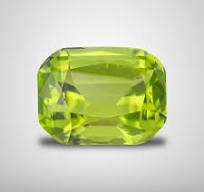
Sees His People As Precius Jewels “And thou shalt set in it settings of stones, even four rows of stones: the first row shall be a sardius, a topaz, and a carbuncle: this shall be the first row. And the second row shall be an emerald, a sapphire, and a diamond. And the third row a ligure [thought to be yellow jacinth], an agate [https://en.wikipedia.org/wiki/Agate], and an amethyst. And the fourth row a beryl, and an onyx, and a jasper: they shall be set in gold in their inclosings.” (verses 17-20) Now they’re going to be gold settings with these jewels in them, even four rows of stones, three in each, “the first row shall be” now I’ll go through these, I’ve got a, not that anybody’s interested, but I am, I’ve the mic and you’re being tortured, so you’ll go through this with me. I have a book called The Jewels or The Gemstones of Judaica and it’s all ancient rabbis and all of their comments on these things. And we don’t have time tonight, you can do a whole study here, they actually tell you why each stone was chosen for that particular tribe, and what they believe in ancient Judaism, what the qualities of each particular stone was, and how that actually reflected the tribe that it was given to. So we’ll go through these quickly here, here are the stones, and the first stone, and it’s according to their birth, is the sardius, now that’s not the one that we understand, this is the sardius stone that’s bright red, like a ruby, that’s for Reuben [could be carnelian, see https://en.wikipedia.org/wiki/Carnelian]. The second stone in the top row is topaz, not the one we’d understand, this is Simeon, and it’s a yellowish green [Topaz, according to the Bible, is the second stone God used to decorate Lucifer (Ezekiel 28:13). The name of the gemstone is derived, in the Old Testament, from the Hebrew pitdah (Strong's Concordance #H6357). Nine out of the ten Bible translations used in the series translate pitdah in this verse as topaz, while the NLT calls it "a pale green peridot."
The
third stone, carbuncle, which is Levi, but this is a Hebrew stone that is sky
blue, it’s beautiful [he says sky blue, but it could have been a brilliant
red]. This shall be the first row, the
second row shall be an emerald, it’s not the one that we know, this is the
stone of Judah, this is a stone that’s black in Israel, in Hebrew. But it’s translucent and when it’s held up to
the light it looks like there’s a fire burning inside of it, it’s a remarkable
stone. So this first stone is of Judah,
it’s a black stone, second stone [of the second row] is a sapphire, this is
Issachar, it’s a stone that’s sea green, and then a diamond, which is Zebulun,
which is a clear stone. The third row is
a ligure, which is the tribe of Dan, which is a turquoise stone, and agate [https://en.wikipedia.org/wiki/Agate], which is Naphtali,
which is a greenish gold with orange hues, a beautiful stone, and an amethyst
which is the tribe of Gad, which is not the amethyst we know today, but it’s
multicoloured, depending on the cut and the stone. The final row, the fourth row is first a
beryl, that’s the tribe of Asher, and it’s a cloudy white stone with light
green grain and veins running through it, it’s a beautiful stone. The next one is an onyx stone, this is for
the tribe of Joseph [so Ephraim &
Manasseh share a stone], and it’s bright green, and I’m quite happy with that,
being a Joseph, that’s where I’m going to live in the holy city, in the green
zone, that’s where I’m going to be up there, near the foundation stones [the
New Jerusalem is going to end up on earth for all eternity, read Revelation
21:1-23]. And the last stone is a jasper
stone, that’s for the tribe of Benjamin, but they came in various colours, it’s
not the jasper that we know today. “And
the fourth row a beryl, and an onyx, and a jasper: they shall be set in gold in their
inclosings.” (verse 20) So you have
three gems, three gems, three gems, three gems, they have the names of the
tribes of Israel engraved in them. And
when we read down, three times it’s going to say between verses 29 and 31,
three times “they shall be on the heart of Aaron,” three times it specifically
says that. He shall bear them on his
heart, and certainly it is a picture of Christ, you know, he knows our names,
it says he ever lives and makes intercession for the saints. Not only does he know our names tonight, he
knows the new name each of us are going to get, because he’s going to give us a
new name. So he knows our present name
and our future name. And I know you’re
thinking ‘Stinker, I know it, it know it [“assling” taken from the BBC
series “The Last Kingdom”]’ no, no,
no, these will be relative to the fact…[unintelligible] and it’ll all be
beautiful. “And the stones shall be
with the names of the children of Israel, twelve, according to their names, like
the engravings of a signet; every one with his name shall they be according to
the twelve tribes.” (verse 21) God
sees his people as precious jewels. You
understand that as a parent, even though you say ‘You must have rocks in
your head,’ they’re beautiful precious stones in their head, you know. I mean, you have children, you understand
those times of seeing those facets in their lives that are beautiful, are
remarkable. God sees his children as
jewels, and Malachi chapter 3 says that we make up in his presence his precious
jewels, his gems, you know, his people.
When you look at them, and we look at them and we study them, we see
their failings, we see their unbelief, and you see all of that, sometimes we
need to remember that that’s not the way God sees us, he’s the God that calls
things that are not as though they were.
When Balak in Numbers, when we get there, he’s going to hire Balaam to
curse the children of Israel, and each time he opens his mouth to curse them,
he blesses them. And Balak says ‘I
didn’t get my money’s worth here, what’s the problem?’ And when Balaam opens his mouth to curse
the children of Israel, he says ‘How lovely are thy tents, O Jacob. There is no iniquity found in thee.’ And the key to that, it says before
he opens his mouth, he’s filled with the Spirit [a temporary filling, that was
for sure]. And if all you do is, when
you look at the Bride of Christ, the Body of Christ, if all you do is see
what’s wrong, and all you do is gripe and complain, all you do is cause
division, your problem is you’re not filled with the Spirit. Because the beauty of the Bride of Christ is
not measured by her performance, it’s by his completed work. Paul wants to present the Corinthian church
as a chaste virgin in the Day of Christ, the immoral Corinthian church. Israel had turned away at Kadesh Barnea,
Israel had worshipped the wrong gods, Israel had died at Kibroth Hattaavah, the
Graves of Lust, Israel had done all kinds of crazy things. And when Balaam looked at them, filled with
the Spirit, he said ‘How lovely are thy tents, O Jacob,’ he would
say ‘There is no iniquity found in thee, O that I might die the death of
the righteous man,’ he would say as he looked at them. But his completed work, and that’s the way
Christ sees his Bride, because of his completed work, not because of our
performance, but because of his completed work, the beauty he’s imputed to us
by his completed work. Here, he sees his
people as these precious jewels. “And
thou shalt make upon the breastplate chains at the ends of wreathen work
of pure gold. And thou shalt make
upon the breastplate two rings of gold, and shalt put the two rings on the two
ends of the breastplate. And thou shalt
put the two wreathen chains of gold in the two rings which are on
the ends of the breastplate. And the
other two ends of the two wreathen chains thou shalt fasten in the
two ouches, and put them on the shoulderpieces of the ephod before it.”
(verses 22-25) this is all woven together,
it’s all intricately one part, there’s a beauty to it, there are rings on the
top two ends of the breastplate, and then they have these golden chains that go
through them, that go through the settings on the shoulders. “And thou shalt make two rings of gold,
and thou shalt put them upon the two ends of the breastplate in the border
thereof, which is in the side of the ephod inward. And two other rings of gold thou shalt
make, and shalt put them on the two sides of the ephod underneath, toward the forepart
thereof, over against the other coupling thereof, above the curious
girdle of the ephod.” (verses 26-27) they’re going to wrap around the waist of the
ephod where it’s woven down the side. “And
they shall bind the breastplate by the rings thereof unto the rings of the
ephod with a lace of blue, that it may be above the curious girdle of
the ephod, and that the breastplate be not loosed from the ephod.” (verse 28) it
was set there firmly, so that it wasn’t loose, didn’t swing around. “And Aaron shall bear the names of the
children of Israel in the breastplate of judgment” notice please, “upon
his heart, when he goeth in unto the holy place, for a memorial before
the LORD continually. And thou shalt put in the breastplate of
judgment the Urim and the Thummim; and they shall be upon Aaron’s heart, when
he goeth in before the LORD: and Aaron shall bear the judgment of the
children of Israel upon his heart before the LORD continually.” (verses
29-30) again, “upon his heart,” the third time. Now, the Urim and Thummim are not little
magic spectacles that Joseph Smith had so he could read the secret tablets and
start the Mormon church, it doesn’t say that here. It doesn’t say the little magic spectacles,
the Urim and Thummim were placed in the pocket behind the breastplate with the
names of the children of Israel, they mean “the lights and perfection,” so
we’re not sure what they were. Most
scholars feel that they were two polished stones, and that when the priest
would go to discern the will of God for the people in a simple “yes” or “no”
type of answer, that he would use the Urim and Thummim. And which stone he pulled out would be the
will of God. We’re going to find them
for awhile, they’re finally going to pass off the scene, it’s a very interesting
process. Is it a white stone and a black
stone? We don’t know. Are they two stones that are exactly the same
with the two different words written on them?
Do the lights and perfections, do the lights have to do with God’s
leading, yes, perfection have to do with knowledge and wisdom saying no? we’re
not sure, we don’t have those details anywhere [we’ll know pretty soon, at the
soon-coming Wedding Feast of the Lamb, cf. Revelation 19:7-9]. But here in the breastplate, part of it the
Urim and Thummim. The priest now is
going to wear this priest’s outfit when he goes in before the LORD. When he goes in without it he’s struck
dead. There’s only one way to approach
and to come into the presence of the LORD, and it has to be
with the priest’s garment, we’re going to see that as we move through
here. The
High Priest’s Robe “And thou shalt make the robe of
the ephod all of blue.” now that’s underneath the ephod, “And there shall
be an hole in the top of it,” because without the hole you can’t put your
head through, “in the midst thereof:
it shall have a binding of woven work round about the hole of it, as it
were the hole of an habergeon,” that’s the collar, the habergeon, “that
it be not rent. And beneath upon
the hem of it thou shalt make pomegranates of blue,” and we’re not
sure, are the pomegranates made of stones that are blue, are the pomegranates
woven in? “and of purple, and of scarlet, round about the hem
thereof; and bells of gold between them round about: a golden bell and a pomegranate, a golden
bell and a pomegranate, upon the hem of the robe round about.” (verses 31-34)
It seems that the robe would hang
down to about the knees underneath of the ephod, made of blue, would have a
border, it would have a gold bell hanging down, and then it seems a
pomegranate, possibly woven, then another bell, so that the bells stagger the
pomegranates all the way around the priest’s garment. And it is says, verse 35, “And it shall be
upon Aaron to minister: and his sound
shall be heard when he goeth in unto the holy place before the LORD, and when he cometh
out, that he die not.” (verse 35) so you’ll be able to say ‘Did you hear that? I think I just heard a priest. That sound like a priest to you? That sounds like there’s a priest around here
somewhere.’ Now it’s an interesting
picture, and it develops as we go through the Old Testament. The high priest would go once a year into the
Holy of Holies with a basin of lambs blood [no, it was goat’s blood, read
Leviticus chapter 16] to the Mercy Seat, the lid of the Ark of the Covenant, on
Yom Kippur, the Day of Atonement. As
this develops, we find from Targums and Hebrew writings, that they would tie a
rope around his ankle, he would wear these bells because if he went into the
presence of God, where God dwelt between the cherubim, and he sinned or
something was wrong, he’d be struck dead.
So as long as he’s jingling, everything’s cool. When the bells stop, you may have a dead
priest in there. And then what do you
do, flip coins to see who goes in to get him?
‘Not me, who wants to go in?’ nobody wants to go in. So it came to the point where they’d tie a
rope around his ankle, so it he died in there they could drag him out under the
vail [‘Pull! Pull!, pull harder, he’s stuck!]. It becomes a very interesting picture,
because we have in history, in the time of Christ, descriptions of the Romans when
they took someone to crucifixion, they would tie their arms to the crossbeam,
the upper beam at the site of crucifixion, sometimes they would carry the whole
cross, but because whether it was the whole cross or the crossbeam, their arms
were outstretched, the Romans to demonstrate their cruelty, would tie to a rope
around the ankle of the person that was going to be crucified, and here and
there they would pull the feet out from under him so he would smash down on his
face. And certainly a picture of our
High Priest, no doubt, who endured that kind of cruelty on his way to
Golgotha. This priest’s bells, so he
could be heard, he’s in there ministering, as long as the bells were ringing
everything’s wonderful, God’s happy, he’s receiving the blood of the lamb
poured on the Mercy Seat [blood of a goat, Pastor Joe. Because Calvary Chapels don’t observe the Day
of Atonement, they don’t focus on the teaching of how the high priests were
instructed to keep it, which was given in Leviticus 16]. If the bells ever stopped ringing, that would
present Israel with another problem, so they would come up with the rope. But here, that he comes in the proper way,
that he die not. The
High Priest’s Turban “And thou shalt make a plate of
pure gold, and grave upon it, like the engravings of a signet, HOLINESS
TO THE LORD.” (verse 36) Literally the Hebrew
is “HOLY IS THE LORD,” so on the mitre, the headpiece would be a golden plate
on the front across his forehead that would say “HOLY IS THE LORD,” “And
thou shalt put it on a blue lace, that it may be upon the mitre; upon the
forefront of the mitre it shall be. And
it shall be upon Aaron’s forehead, that Aaron may bear the iniquity of the holy
things, which the children of Israel shall hallow in all their holy gifts; and
it shall be always upon his forehead, that they may be accepted before the LORD. And thou shalt embroider the coat of fine
linen, and thou shalt make the mitre of fine linen, and thou shalt make
the girdle of needlework.” (verses 37-39) Fine
Clothes For Aaron’s Sons “And for Aaron’s sons thou shalt
make coats, and thou shalt make for them girdles, and bonnets shalt thou make
for them, for glory and for beauty. And
thou shalt put them upon Aaron thy brother, and his sons with him; and shalt
anoint them, and consecrate them, and sanctify them, that they may minister
unto me in the priest’s office.” (verses 40-41)
So
a beautiful picture, the anointing, serving the LORD, not in the power of
the flesh, but in the anointing of the Holy Spirit, a life that’s
Spirit-filled, again, a Spirit-filled Christian, not a title, a condition. You have a lot of Christians who say ‘Ya
I’m Spirit-filled’ and they’re living in sin at the same time, I don’t buy
it. ‘Those that are led of
the Spirit are the children of God (Romans 8:14) I don’t care if you’re talking in tongues, if
you’re living in sin you got a problem.
My pastor [Pastor Chuck Smith, see https://unityinchrist.com/history/smith.htm] used to say “The
steam is in the engine not just to blow the whistle, but to move the train,” and
the Spirit of God in our hearts is given so we would walk in the Spirit and be
led of the Spirit. Yet there are gifts
that are wonderful, they were anointed, these priests, then they were
consecrated, given in the hands, it says, and sanctified, set apart, their
lives were set apart. Your lives are set
apart, look around this room, we’re all here in our civies, so it doesn’t look
like any of us are set apart, but we are.
We’re separate from this world, we’re new creations in Christ, he’s
chosen us out from among the world, to be light, to be salt, to be a testimony
to this lost world [see https://unityinchrist.com/mathew/Matthew5-13-16.htm], everybody in this
room is his, blood-bought, sanctified.
It’s positional, it isn’t always performance, we make mistakes, we
struggle, we’re Christians, but our lives have been set apart for his purposes,
for his purposes. His calling is on our
lives. And there’s a whole lost world
out there, that doesn’t know the truth, and the amount of truth and grace
represented in this room right now is unimaginable, the amount of truth and
grace in this room, right now, gives the devil a migraine. Do we realize, do we realize, Jesus said ‘He
who is least in the Kingdom is greater than John the Baptist,’ the
message, the truth, what God has invested in us, and what happens with that,
how it infects someone when the love of Christ is shed abroad from our hearts,
when we touch a friend or a relative or a school mate or someone who doesn’t
know, who does not know. And you think, ‘Oh
man, I’m not effective, I do my best,’ look, Paul says ‘One man sows,
another man waters, only God brings the increase.’ Our calling is to bring Christ to men, only
God brings men to Christ [cf. John 6:44].
But our lives have been set aside, anointed, consecrated, sanctified,
set aside for higher things. “And
thou shalt make them linen breeches to cover their nakedness; from the loins
even unto the thighs they shall reach:
and they shall be upon Aaron, and upon his sons, when they come in unto
the tabernacle of the congregation, or when they come near unto the altar to
minister in the holy place; that they bear not iniquity, and die: it shall be a statute for ever unto
him and his seed after him.” (verses 42-43) “breeches,” trousers. Oh, I wanted to do the next chapter, let’s
see here, we have three minutes left and it’s only 46 verses [laughter]. We can’t do it. I just can’t do it, sorry. It’s a great chapter, I love it, when we get
to that chapter. Read ahead, please,
read ahead, just, as we come and see the priests consecrated, the lessons in
there are remarkable for you and I, the things that take place. So read ahead, next week we’ll try to do 29,
we should be able to do 29, 30, 31, we’ll take a running start at it. But look, read ahead. People think ‘Oh Exodus, I’ll wait till we
get to Daniel, then I’ll come.’ Look,
this is filled with incredible things, this is something Moses is beholding in
heaven [via vision, of course], and writing down the description of it in types
and chapter for us to see, the things that God has for us, incredible
stuff. Let’s stand, let’s pray, let’s
lift our voices to the Lord, we’ll worship, exercise our priesthood, let’s lift
to him a sweet savour, we’re going to read about that. A sweet savour is really a savour of rest,
let’s let the fruit of our lips be an acceptable sacrifice before him, and
let’s lift our voices to bless him, let’s bless the Lord, and do it with our
hearts, not just with our voices…[transcript of a connective expository sermon
on Exodus 27:1-21 and Exodus 28:1-43, given by Pastor Joe Focht, Calvary Chapel
of Philadelphia, 13500 Philmont Avenue, Philadelphia, PA 19116] related links: We’re separate from this world,
we’re new creations in Christ, he’s chosen us out from among the world, to be
light, to be salt, to be a testimony to this lost world, see https://unityinchrist.com/mathew/Matthew5-13-16.htm Audio version: https://resources.ccphilly.org/detail.asp?TopicID=&Teaching=WED560 |