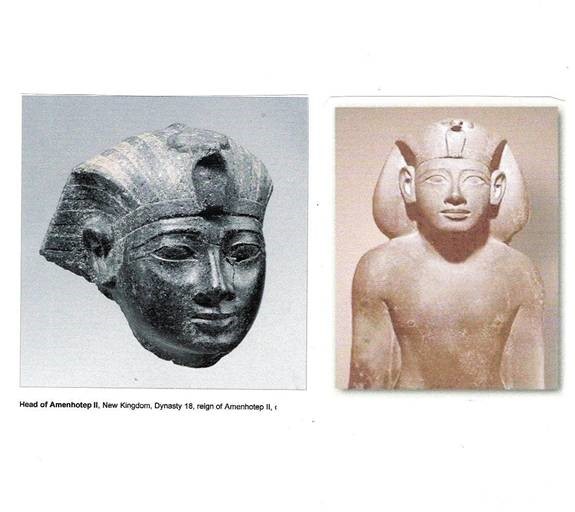





|
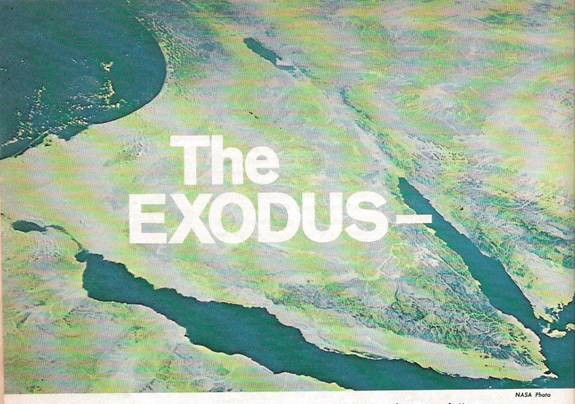
The Exodus from
Egypt A Biblical and historical account I. The Historic
Characters Exodus 1:1-7, “Now these are the names of the children of Israel, which
came into Egypt; every man and his household came with Jacob. Reuben, Simeon, Levi, and Judah, Issachar,
Zebulun, and Benjamin, Dan, and Naphtali, Gad, and Asher. And all the souls that came out of the loins
of Jacob were seventy souls: for Joseph was in Egypt already. And Joseph died, and all his brethren, and
all that generation. And the children of
Israel were fruitful, and increased abundantly, and multiplied, and waxed
exceedingly mighty; and the land was filled with them.” Now we know that the Hyksos, an
Asiatic people (some ancient historians link them to the Amalekites) invaded
the eastern Nile Delta in the Twelfth dynasty, initiating the Second
Intermediate Period of Ancient Egypt.
The people wore cloaks of many colors associated with the mercenary
Mitanni bowmen and cavalry of Northern Canaan, Aram, Kadesh, Sidon and
Tyre. They conquered Lower Egypt and the
Nile Delta. The Hyksos kingdom was
centered in the eastern Nile Delta and Middle Egypt and was limited in size,
never extending south into Upper Egypt, which was under control by Theban-based
rulers. Most importantly, the Hyksos
introduced new tools of warfare into Egypt, most notably the composite bow, the
horse drawn chariot and the careful scribe.
Hyksos relations with the south (Theban Upper Egypt) seems to have been
mainly of a commercial nature, although Theban princes appear to have
recognized the Hyksos rulers and may possibly have provided tribute for a period. These men were acquainted with cattle and
sheep, more than the Egyptians. Their
leaders assumed the role of the previous Pharaohs, although they were not true
Egyptians. It is to this Hyksos ruled
Lower Egypt that Joseph brought his family down to live in. (See Genesis chapters 36, 38-48.) After Joseph was instrumental in saving Egypt
from the massive seven-year famine that struck the whole Middle East, these
Hyksos Pharaohs were friendly with Joseph, and subsequently with the
Israelites, as indicated by verses 1-7 of Exodus 1. But in verses 8-22, we see a change of
attitude. What happened? Verse
8, “Now there arose a new king over Egypt, which knew not Joseph.” Now we know these Hyksos “Pharaohs” would
have a lot to be grateful for toward the Israelites, even after Joseph’s death
and the Pharaoh that knew him. What
happened historically? We know that the
real Egyptian rulers in Upper Egypt, the Thebans, must have resented the
imposter Pharaoh’s that had taken over Lower Egypt and the Nile Delta. In 1576BC a king arose in the south, in Upper
Egypt at Thebes. His name was Ahmose I,
(sometimes written as Amosis I). He was
a member of the Theban royal house, the son of Pharaoh Tao II Sequenenre and
brother of the last pharaoh of the Seventeenth dynasty, King Kamose. Sometime during the reign of his father or
grandfather, Thebes rebelled against the Hyksos, the rulers of Lower
Egypt. When he was seven his father was
killed, and he was about ten when his brother died of unknown causes, after
reigning only three years. Ahmose I
assumed the throne after the death of his brother, and upon coronation became
known as Neb-Pehty-Re (The Lord of
Strength is Re). During his reign,
he completed the conquest and expulsion of the Hyksos from the delta region,
restored Theban rule over the whole of Egypt (Upper and Lower Kingdoms) and
successfully reasserted Egyptian power in its formerly subject territories of
Nubia and Canaan. He then reorganized the
administration of the country, reopened quarries, mines [guess who he was using
to mine those rock-quarries and mines?
You guessed it, the Israelites!] and trade routes, and began massive
construction projects of a type that had not been undertaken since the time of
the Middle Kingdom. This building
program culminated in the construction of the last pyramid built by native
Egyptian rulers. Ahmose’s reign
laid the foundations for the New Kingdom, under which Egyptian power reached
its peak. His reign is usually dated to
about 1576-1551BC (or 1550-1525BC by an alternate dating system which will be
explained a little later). (see http://en.wikipedia.org/wiki/Ahmose_I.) for more about Ahmose I.) This
started the line of kings “which knew not Joseph.” This verse 8 doesn’t refer to one, but three
pharaohs. Key 15th Century Egyptian
Pharaoh Lineage, why Hatshepsut was “pharaoh’s daughter” “Her
possible grandfather Ahmose, founder of the 18th Dynasty, had driven
out the Hyksos invaders who had occupied the northern part of the Nile Valley
for two centuries. When Ahmose’s son
Amenhotep I did not produce a son who lived to succeed him, a redoubtable general
known as Thutmose is believed to have been brought into the royal line since he
had married a princess. Hatshepsut was
the oldest daughter of Thutmose I and his Great Royal Wife, Queen Ahmose,
likely a close relative of King Ahmose.
But Thutmose I also had another son by another queen [Mutnofret], and
this son, Thutmose II, inherited the crown when his father “rested from
life.” Adhering to a common method of
fortifying the royal lineage---and with none of our modern-day qualms about
sleeping with your sister---Thutmose II and Hatshepsut married. They produced one daughter; a minor wife,
Isis, would give Thutmose II the male heir that Hatshepsut was unable to
provide. Thutmose II did not rule for
long, and when he was ushered into the afterlife…Thutmose III, was still a
young boy. In time-honored fashion,
Hatshepsut assumed effective control as the young pharaoh’s queen regent.” [National Geographic Magazine, p. 97, April
2009] Now we’re getting a little ahead
of ourselves. But it was Thutmose I that
instigated the Israelite baby-killing.
His daughter was Hatshepsut. The
Bible calls her “Pharaoh’s daughter” in Exodus 2:5, 7, 9, 10, and in Acts 7:21
and Hebrews 11:24. This was none other
than Hatshepsut. The 15th
century BC date of the Exodus agrees with a literal reading of the Old
Testament and places the Exodus in the middle of the 15th century
BC---deduced from a literal reading of 1st Kings 6:1, and supported
by Judges 11:26. Acknowledging Solomon
began his reign around 970BC, it can be mathematically deduced from 1st
Kings 6:1 that the Exodus occurred around 1446/7BC. So if Hatshepsut falls within the right dates
for the birth of Moses, Thutmose I was the one who had the male Israelite
babies drowned. Thutmose I instigates the drowning of
the Hebrew male babies Backdating from the Biblical date of
1446 – 80 years (Moses’ age at the time of the Exodus) gave the birth date of
1526BC for Moses. Thutmose I was
reigning at this time. It is a
reasonable assumption Hatshepsut married Thutmose II a little while before he
assumed the throne in 1517BC.
“Hatshepsut can have been no more than 15 years old when she married her
brother and become consort” (Tyldesley 1996:96). So if Hatshepsut was 15 in 1517BC, 1517BC +
15 = 1532BC for her estimated birthdate.
Thutmose I had a daughter, but no sons by his primary wife Queen Ahmose,
as we saw. Now compare Moses birth-date
to hers. Moses was 80 at the time of the
Exodus. 1446BC + 80 = 1526BC. 1532BC (Hatshepsut’s est. birth-date) –
1526BC (Moses birth-date) = 6 years.
Hatshepsut was possibly six years old when she rescued Moses by having
her servants go fetch him. The Bible
says she had royal attendants. She was
the daughter of Thutmose I and his primary queen, Queen Ahmose. This meant she was important, able, even at 6
years old, to command people to do whatever she told them to do. Hatshepsut was the only child of Thutmose I
and Queen Ahmose that survived childhood.
So, it was under her father Thutmose I that the drowning of the Hebrew
babies took place. And she had one of
them saved. Let’s read what he did. The Bible reveals he basically made slaves
out of the Israelites. Now this “new
king” situation could have started out under Ahmose I, but somewhere along the
line his son-in-law Thutmose I took over.
It is this Pharaoh that I believe verse 8 refers to when it states “Now
there arose up a new king over Egypt…”
We will lay out the line of kings in a little bit as explanation. Exodus
1:8-22, “Now there arose up a new king over Egypt, which knew not Joseph. And he said unto his people, Behold, the
people of the children of Israel are
more and mightier than we: Now don’t
forget, the Israelites were considered “allies” of the Hyksos Pharaohs, and
thus their loyalty was suspect just after the Theban re-conquering of Lower
Egypt and the Nile Delta. Come, let us
deal wisely with them; lest they multiply, and it come to pass, that, when
there falleth out any war, they join also unto our enemies, and fight against
us, and so get them up out of the
land. Therefore they did set taskmasters
to afflict them with their burdens. And
they built for Pharaoh treasure cities, Python and Raamses. But the more they afflicted them, the more
they multiplied and grew. And they were
grieved because of the children of Israel.
And the Egyptians made the children of Israel to serve with rigor: and
they made their lives bitter with hard bondage, in mortar, and in brick, and in
all manner of service in the field: all their service, wherein they made them
serve, was with rigour. And the king of Egypt spake to the Hebrew
midwives, of which the name of the one was
Shiprah, and the name of the other Puah: and he said, When ye do the office of
a midwife to the Hebrew women, and see them
upon the stools; if it be a son, then
ye shall kill him: but if it be a
daughter, then she shall live. But the
midwives feared God, and did not as the king commanded them, but saved the men
children alive. And the king of Egypt
called for the midwives, and said unto them, Why hast ye done this thing, and
have saved the men children alive? And
the midwives said unto Pharaoh, Because the Hebrew women are not as the Egyptian women; for they are lively, and are delivered ere the midwives come in unto
them. Therefore God dealt well with the
midwives: and the people multiplied, and waxed very mighty. And it came to pass, because the midwives
feared God, that he made them houses.
And Pharaoh charged all his people, saying, Every son that is born ye shall
cast into the river, and every daughter ye shall save alive.” So it was
Thutmose I that instigated the killing of all male Hebrew babies in Egypt. Their population was growing rapidly, and
militarily, he must have been worried, even though he had them in slavery, due
to their past alliance with the Hyksos pharaohs. Now an interesting twist comes into the
picture. Moses and ‘Pharaoh’s
daughter’ enter the picture Exodus 2:1-10, “And there went a man of the house of Levi, and took to wife a daughter of Levi. And the woman conceived, and bare a son: and
when she saw him that he was a goodly
child, she hid him three months. And when she could not longer hide him, she
took for him an ark of bulrushes, and daubed it with slime and with pitch, and
put the child therein; and she laid it
in the flags by the river’s brink. And
his sister stood afar off, to wit what would be done to him. And the daughter of Pharaoh came down to wash
herself at the river; and her maidens
walked along by the river’s side; and when she saw the ark among the flags, she
sent her maid to fetch it. And when she
had opened it, behold, the babe
wept. And she had compassion on him, and
said, This is one of the Hebrews’
children. Then said his [Moses’] sister to Pharaoh’s
daughter, Shall I go and call to thee a nurse of the Hebrew women, that she may
nurse the child for thee? And Pharaoh’s
daughter said unto her, Take this child away, and nurse it for me, and I will
give thee thy wages. And the woman took the child, and nursed
it. And the child grew, and she brought
him unto Pharaoh’s daughter, and he become her son. And she called his name Moses: and she said,
Because I drew him out of the water.” Pastor
Chuck Smith says about Moses mother, Jochebed:
“Isn’t it interesting how God is able even in adverse circumstances to
work his will, to work his purposes?
“All things work together for good to those who love God” (Rom.
8:28). I can imagine that as Jochebed
put that little ark in the river, there was a prayer sent up from her heart
that somehow this little child of hers might be found [Moses was only three
months old] and adopted by one of the Egyptians, and perhaps his life be
spared. She could not bring herself to
drown her baby. But God had other
plans. And little Miriam, bold little
Miriam, came running up to the Pharaoh’s daughter [little six year old
Hatshepsut, as we saw], and she said, “How would you like me to get a nurse for
your baby from among the Hebrews?” And
she said, “Fine, go get one.” And so
Miriam ran home, got her mother, and the Pharaoh’s daughter paid Jochebed for
raising her own child.” [The Word For
Today Bible, NKJ Version, p.79, Exodus 2:7-9 side-note.] Now Moses in Hebrew means
“drawn out”, but in Egyptian it means “son of”, as in “Thutmose” means “son of
Thut.” It’s a title. Mose’ was called that, because no one knew
who he was the “son of.” He would have
been called Mose’ in Egyptian. Just a
small point. How long did Moses remain
with his birth-mother? Sandra Mackey in
her book on Arab culture says “boys breast-fed much longer than girls, often
for as long as two to three years” (1987:127).
Moses probably remained with his mother for three years, thus being able
to learn and remember his Hebrew origins (cf. Exodus 2:11-12; Act
7:25-27). From here Moses would have
been introduced into the royal household, the adopted son of “Pharaoh’s
daughter” as we saw in Exodus 2:10. He
was now in the Dynasty 18 royal harem along with all the other children of
royal blood. The curriculum would be the
study of hieroglyphic and other scripts, as well as the foreign languages of
the world. Public speaking too was an
important part of their training, as well as the ability to write well. As Hatshepsut’s adopted son he was
well-educated in the royal harem of dynasty 18, and able to dialogue well, as
seen later, before Pharaoh, and his ability to record the first five books of
the Old
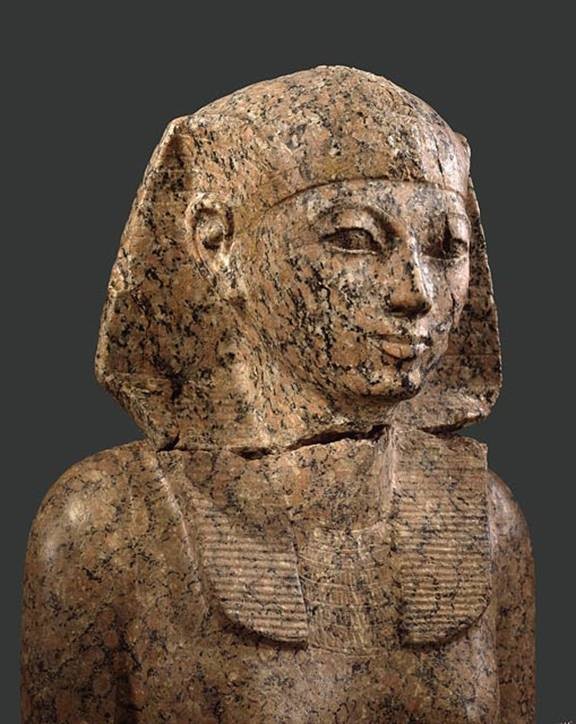
Below, statue of Queen Hatshepsut before she assumed the complete role of
Pharaoh
Line of Dynasty 18
Pharaohs AHMOSE I
1576-1551
Conquers Hyksos, drives them out of Lower Egypt. AMENHOTEP I 1551-1530 Has no
sons THUTMOSE I 1530-1517
Drowns baby Israelites.
Father of Hatshepsut , who finds baby Moses in 1526BC. THUTMOSE II 1517-1504
Marries half-sister Hatshepsut just before his coronation.
HATSHEPSUT 1504-1483
Rules Egypt as the most powerful Pharaoh-queen Egypt has
ever had. Sends Moses away into the
desert in 1486BC, three years before she dies. THUTMOSE III 1504-1450
Takes over rule of Egypt in 1483, rules Egypt for 22 years
and dies. Builds up elite military force, 2nd to none in the
Middle East. AMENHOTEP II 1452-1417 Takes throne 6 years before
Moses returns from Midian. Is the
Pharaoh of the Exodus. Exodus occurs in
spring of 1446BC THUTMOSE IV 1417-1390 AMENHOTEP III 1390-1352 AKHENATON 1352-1336 Abandons
Egypt’s worship of multiple gods to the worship of one god. Wonder why? SMENHARE
1338-1336 TUTANKHAMON 1336-1327 AYE
1327-1323
HOREMHAB 1323-1295 Dates
are those found in P. Ray (1997:4) [Note about this chart and apparent
contradiction in dating. Amenhotep II’s
coronation can be dated without much difficulty because of a number of lunar
dates in the reign of his father, Thutmose III.
These sightings limit the date of Thutmose III’s ascension to either
1504BC or 1479BC. It can be seen in many
of the research articles used, some use one set of dates, and others use the
other set of dates based on these calculations, which by the way are 25 to 26
years apart. I have used the 1504 BC set
of dates due to the fact that it lines up with Bible timing dates, such as
Solomon’s ascension to the throne in 966BC.
Easy choice. The two differing
sets, 25 years apart does not change the list of kings, just alters their
reigns equally by 25 to 26 years.
(Wikipedia article on Amenhotep II)].
Thutmose III Moses kills an
Egyptian and has to flee Egypt Exodus 2:11-15, “And it came to pass in those days, when Moses was grown,
that he went out unto his brethren, and looked on their burdens: and he spied
an Egyptian smiting an Hebrew, one of his brethren. And he looked this way and that way, and when
he saw that there was no man, he slew
the Egyptian, and hid him in the sand.
And when he went out the second day, behold, two men of the Hebrews
strove together: and he said to him that did the wrong, Wherefore smitest thou
thy fellow? And he said, Who made thee a
prince and a judge over us? intendest thou to kill me, as thou killedst the
Egyptian? And Moses feared, and said,
Surely this thing is known. Now when
Pharaoh heard this thing, he sought to slay Moses. But Moses fled from the face of Pharaoh, and
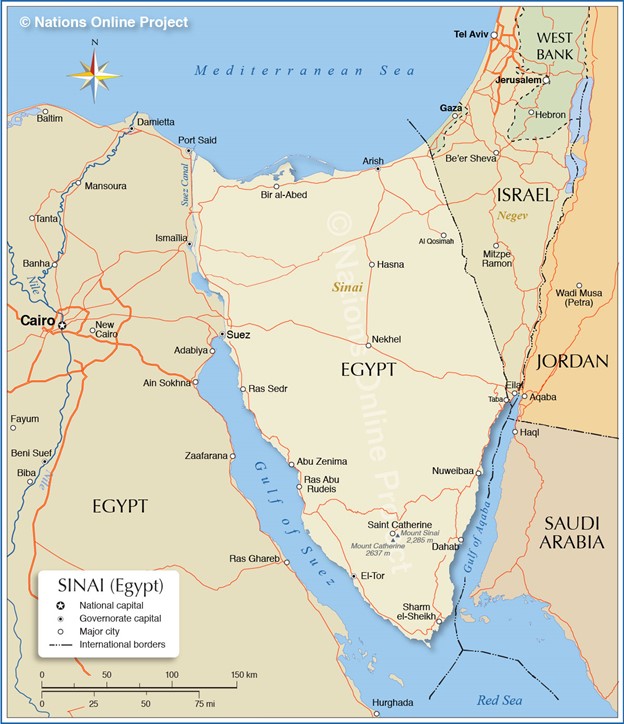
dwelt in the land of Midian: and he sat down by a well.” This Midian would be on the western
shores of what is now Saudi Arabia. From
the above chart we can deduce something significant. If Moses fled Egypt when he was 40, and
returned when he was 80, as the Bible says, then based on the date chart above,
we see he fled around 1486BC. This was
about two to three years before Hatshepsut died. So when Moses killed the Egyptian, it appears
she might have sent him on his way.
Modern CT scans of the mummy believed to be Hatshepsut suggests she was
about 50 when she died of some combination of metastic bone cancer, diabetes,
and liver cancer. So when Moses killed
the Egyptian, she sent him away, apparently, for his own safety. She must have known she didn’t have long to
live, considering her condition. This is
when he fled to Midian, 1526BC-40 = 1486BC.
Hatshepsut dies at age 46 or 47 in 1483BC. Thutmose III now rules Egypt from 1483BC
until his death in 1450BC, ruling 22 years.
Moses returned to Egypt when he was 80 years old, God stating in Exodus 4:19, “Go back to Egypt for all the
men are dead who sought your life.”
It is 1446BC, Thutmose III has been dead for four years, and his son
Amenhotep II is now ruling Egypt as Pharaoh, with an iron fist. (Amenhotep II co-ruled with his father,
Thutmose III for two years.) How Does Moses Gain Access to the
Pharaoh? Do you remember Moses was raised and educated in the royal harem of Dynasty 18? From what we learned about Hatshepsut’s family, and Moses being her adopted son, Moses was legally Amenhotep II’s step-uncle! Also the royal men and women who were raised in the royal harem knew Moses, which could have facilitated his access to Amenhotep II. “Political net-working among young men educated in the harem was common” (Tyldesley 1996:54-55). Upper-level society was no more than 2 to 3 thousand. They knew and remembered Moses. [information taken from the fine article “Moses and Hatshepsut”, written by Col. (Ret.) David G. Hansen, PhD. See http://www.biblearchaeology.org/post/2009/02/Moses-and-Hatshepsut.aspx.]
Amenhotep II What Kind of Pharaoh
Was Amenhotep II? “When he assumed power, Amenhotep II
was 18 years old according to an inscription from his great Sphinx stela: “Now his Majesty
appeared as king as a fine youth after he had become ‘well developed’, and had
completed eighteen years in his
strength and bravery.” After becoming pharaoh, Amenhotep
married a woman of uncertain parentage named Tiaa…Amenhotep’s first campaign
took place in his third regnal year. It
is known that the pharaoh was attacked by the host of Qatna while crossing the
Orontes river, but he emerged victorious and acquired rich booty, among which
even the equipment of a Mitanni charioteer is mentioned. The king was well known for his physical
prowess and is said to have singlehandedly killed 7 rebel Princes at Kedesh
which successfully terminated his first Syrian campaign on a victorious
note. After the campaign, the king
ordered the bodies of the seven princes to be hung upside down on the prow of
his ship. Upon reaching Thebes all but
one of the princes were mounted on the city walls. The other was taken to the often rebellious
territory of Nubia and hung on the city wall of Napata, as an example of the
consequence of rising against Pharaoh and to demoralize any Nubian opponents of
Egyptian authority there. Amenhotep
called this campaign his first in a Stele from Amada, however he also called
his second campaign his first, causing some confusion. The most common solution for this, although
not universally accepted, is that this was the first campaign he fought alone
before the death of his father and thus before he was the sole king of Egypt,
and he counted his second campaign as his first because it was the first that
was his and his alone. Amenhotep’s first
campaign was so successful that he is recorded as having captured a vast amount
of war booty, “consisting of 6,800 deben of gold and 500,000 deben of copper
(about 1,643 and 120,833 pounds respectively), as well as 550 mariannu
captives, 210 horses and 300 chariots.”
In April of his seventh year [1445BC], Amenhotep was faced with a major
rebellion in Syria by the vassal states of Naharin and dispatched his army to
the Levant to suppress it. This
rebellion was likely instigated by Egypt’s chief Near Eastern rival,
Mitanni. His stele of victory carved
after this campaign records no major battles, which has been read a number of
ways…” Moses returned in the sixth year
of his reign, remember. (Two years
co-ruling with his father Thutmose III and four years on his own = “sixth year
of his reign.”) We’ll read more about
this in another quote about Amenhotep II.
“…It may be that this campaign was more similar to one of the tours of
Syria which his father had fought, and he only engaged minor garrisons in
battle and forced cities to swear allegiance to him—oaths immediately broken
upon his departure. Alternately, it
appears that the two weeks when Amenhotep would have been closest to Mitanni
are omitted from the stele, thus it is possible that his army was defeated on
this campaign. Amenhotep’s last campaign
took place in his ninth year [three
years after the Exodus], however it apparently did not proceed farther north
than the Sea of Galilee. According to
the list of plunder from this campaign, Amenhotep took 101,128 slaves…” [ http://en.wikipedia.org/wiki/Amenhotep_II .] “Change
in Foreign-Policy after the Second Asiatic Campaign Another
oddity of A2 [Stele?] is that after its conclusion, the Egyptian
army---established by Thutmose III as the fifteenth-century-BC’s most elite
fighting force---went into virtual hibernation.
It’s previous policy of aggressiveness toward Mitanni became one of
passivity and the signing of peace treaties.
The reason for this new policy is missing from the historical record,
but Amenhotep II evidently was the pharaoh who first signed a treaty with
Mitanni, subsequent to A2. Redford
connects this event to the “arrival (after year 10, we may be sure) of a
Mittannian embassy sent by [Mitanni’s King] Saussatar with proposals of
‘brotherhood’ (i.e., a fraternal alliance and renunciation of
hostilities). Redford adds that
“Amenhotep II seemed susceptible to negotiations” and that he “was apparently
charmed and disarmed by the embassy from ‘Naharin,’ and perhaps even signed a
treaty. Yet such a treaty is completely
out of character for imperial Egypt and this prideful monarch, especially since
“the pharaonic state of the Eighteenth Dynasty could, more easily than Mitanni,
sustain the expense of periodic military incursions 800 km into Asia. Support for Amenhotep II being the first to
sign a pact with Mitanni is found in the actions of Thutmose IV: “Only by
postulating a change of reign can we explain a situation in which the new
pharaoh, Thutmose IV, can feel free to attack Mitannian holdings with
impunity. Why would Amenhotep II do the
unthinkable, and opt to make a treaty with Mitanni? This mysterious reversal in foreign policy
would remain inexplicable if not for the possibility of a single, cataclysmic
event. If the Egyptians lost virtually
their entire army in the springtime disaster at the Red Sea, in Year 9 a desperate
reconnaissance campaign designed to “save face” with the rest of the ancient
world and to replenish the Israelite slave-base would be paramount. Certainly the Egyptians needed time to rally
their remaining forces together, however small and/or in shambles their army
may have been, and it would explain a November campaign that was nothing more
than a slave-raid into Palestine as a show of force. The Egyptians could not afford to live
through the winter without the production that was provided by the Hebrew
workforce, and they could not allow Mitanni or any other ancient power to
consider using the winter to plan an attack on Egyptian territories, which
seemed vulnerable. If this scenario
represents what actually transpired in ANE [Ancient Near East] history,
however, tangible proof is needed to verify its veracity.” [Douglas Petrovich (a TMS alumnus, serves on
the faculty of Novosibirsk Biblical Theological Seminary, Novosibirsk,
Russia. See http://www.tms.edu/tmsj/17f.pdf for his full and exhaustive article.] The author goes on to show that
potentially 2 million Israelite slaves were lost to the Egyptian workforce (cf.
Numbers1:45-46 + more than double that figure, accounting for women and
teenagers). Removal of Hatshepsut’s monuments and
written memory of her reign So at the end of Thutmose III’s life
it appears he started a cleansing campaign to rid any historic knowledge of
Hatshepsut after she assumed the role of Pharaoh, so as to assure the
legitimate transfer of power to his son Amenhotep II. Moses is still in Midian up until the sixth
year of Amenhotep II (two years co-ruling with his father, four on his
own). Hatshepsut had sent Moses away
into the desert of Midian, seeing the end of her life coming. When Moses is told by God to return to Egypt Thutmose
III is dead (cf. Exodus 4:19), having died in 1450BC. It is now 1446BC. So under Thutmose III, and now this brutal
conquering Pharaoh Amenhotep II, these poor Israelites have been labouring as
slaves under successively brutal, militaristic pharaohs. After his and Egypt’s massive loses resulting
from the Exodus we find more historic evidence that Amenhotep II went on a real
vengeful campaign to remove all references to Hatshepsut recorded anywhere in
Egypt. From Douglas Petrovich we get,
“Second, Amenhotep II was the sole culprit in his campaign to destroy
Hatshepsut’s image. [Col. David Hansen
thinks this “campaign” could have started very late in Thutmose III’s
reign.] The responsible individual
likely possessed pharaonic authority, and one legitimate motive for Amenhotep
II to have committed this act is Hatshepsut’s rearing of Moses as her own son
in the royal court (Acts 7:21). After the
Red Sea incident, Amenhotep II would have returned to Egypt seething with
anger, both at the loss of his firstborn son and virtually his entire army
(Exod. 14:28), and he would have just cause to erase her memory from Egypt and
remove her spirit from the afterlife.
[Destroying the written history of a monarch was supposed to do this, in
Egyptian religious beliefs.] The
Egyptian people would have supported this edict, since their rage undoubtedly
rivaled pharaoh’s because of their mourning over deceased family members and
friends. The nationwide experience of
loss also would account for the unified effort throughout Egypt to fulfill this
defeated pharaoh’s commission vigorously.
A precedent exists for Amenhotep II’s destruction of her monuments early
in his reign: “At Karnak Hatshepsut left…the Eighth Pylon, a new southern gateway
to the temple precinct….Ironically, evidence of Hatshepsut’s building effort is
today invisible, since the face of the pylon was erased and redecorated in the
first years of Amenhotep II.” Perhaps
Year 9 was when it all began.” [Ibid.
Douglas Petrovich] Links: Hyksos, http://en.wikipedia.org/wiki/Hyksos Ahmose I, http://en.wikipedia.org/wiki/Ahmose_I Hatshepsut, http://en.wikipedia.org/wiki/Hatshepsut “Moses and Hatshepsut”, http://www.biblearchaeology.org/post/2009/02/Moses-and-Hatshepsut.aspx [very detailed study] Amenhotep II, http://en.wikipedia.org/wiki/Amenhotep_II AMENHOTEP II AND THE HISTORICITY OF
THE EXODUS-PHARAOH, http://www.tms.edu/tmsj/17f.pdf [very detailed study] http://www.katapi.org.uk/BAndS/ChVI.htm Pastor
Joe Focht, Calvary Chapel of Philadelphia, does a good job of covering Exodus
chapters 3-4 which has been omitted in this study on the Exodus of Egypt. My study here on the Exodus of Egypt pretty
well covers from Exodus chapters 1 through 2, and chapters 5 through 14. To listen to those two sermons covering
Exodus 3 through 4 log onto: https://resources.ccphilly.org/detail.asp?TopicID=&Teaching=WED547 and
https://resources.ccphilly.org/detail.asp?TopicID=&Teaching=WED548
II. The Plagues
First Encounter with Pharaoh---a type of Satan
Exodus 5:1-22, “Afterward Moses and
Aaron went in and told Pharaoh, “Thus says the LORD
GOD of Israel: ‘Let My people go, that they may hold a feast to
Me in the wilderness.’” And Pharaoh
said, ‘Who is the LORD, that I should obey His voice to
let Israel go? I do not know the LORD, nor will I let Israel go.’ So they said, The God of the Hebrews has met
with us. Please, let us go three days’
journey into the desert and sacrifice to the LORD
our God, lest He fall upon us with pestilence or with sword.’ Then the king of Egypt said to them, ‘Moses
and Aaron, why do you take the people from their work? Get back
to your labor.’ And Pharaoh said, ‘Look,
the people of the land are many now,
and you make them rest from their labor!’
So the same day Pharaoh commanded the taskmasters of the people and
their officers, saying, ‘You shall no longer give the people straw to make
brick as before. Let them go and gather
straw for themselves. And you shall lay
on them the quota of bricks which they made before. You shall not reduce it. For they are idle; therefore they cry out,
saying, ‘Let us go and sacrifice to
our God.’ Let more work be laid on the
men, that they may labor in it, and let them not regard false words.’ And the taskmasters of the people and their
officers went out and spoke to the people, saying, ‘Thus says Pharaoh: ‘I will
not give you straw. Go get yourselves
straw where you can find it; yet none of your work will be reduced.’’ So the people were scattered abroad
throughout all the land of Egypt to gather stubble instead of straw. And the taskmasters forced them to hurry, saying, ‘Fulfill your
work, your daily quota, as when there
was straw.’ Also the officers of the
children of Israel, whom Pharaoh’s taskmasters had set over them, were beaten and were asked, ‘Why have you not
fulfilled your task in making brick both yesterday and today, as before?’ Then the officers of the children of Israel
came and cried out to Pharaoh, saying, ‘Why are you dealing thus with your
servants? There is no straw given to
your servants, and they say to us, ‘Make brick!’ And indeed your servants are beaten, but the
fault is in your own people.’ But he said,
‘You are idle! Idle!
Therefore you say, ‘Let us go and sacrifice
to the LORD.’
Therefore go now and work; for
no straw shall be given you, yet you shall deliver the quota of bricks.’ And the officers of the children of Israel
saw that they were in trouble after it was said, ‘You shall not reduce any bricks from your quota.’ Then, as they came out from Pharaoh, they met
Moses and Aaron who stood there to meet them.
‘Let the LORD look on you and judge, because you have made us
abhorrent in the sight of Pharaoh and in the sight of his
servants, to put a sword in their hand to kill us.’ So Moses returned to the LORD and said, ‘LORD, why have You brought trouble on
this people? Why is it You have sent me? For
since I came to Pharaoh to speak in Your name, he has done evil to this people;
neither have You delivered Your people at all.’” Now
Egypt in the Bible has always been a type for sin and this evil world. When God is about to draw a person or a
people to himself, to be his children, his servants, ‘the prince of the power
of the air’, Satan, always resists and tries to hold that person or people in
his grasp. There is always a struggle to
come free of the world, it’s evil systems and come out from under Satan’s
grasp. Pharaoh Amenhotep II here is
being used in the Bible as a type for Satan, who owns the world. In Matthew 4:8, when Satan offered the
kingdoms of the world to Jesus if Jesus would bow down to him, notice Jesus
never told Satan that the kingdoms of the world were not his to give. He corrected Satan only where he was wrong,
where Satan offered the kingdoms of the world if Jesus would bow down and worship him. This world, its governments, its peoples
today are firmly in the hands and under the influence of Satan. Just a simple study of the history of
mankind, filled with countless brutal wars, between evil dictators and the
innocent, where most of the time the evil wins out. And even the good in this world falls way
short of being righteous. The
children of Israel are a type for the believers God the Father has drawn to
Jesus over the centuries. In that
process of drawing us to Jesus by the Holy Spirit there is always a titanic
struggle between the god of this world, Satan, to retain ownership over that
individual, and God to succeed in drawing that person to Jesus. Satan, just as Pharaoh, does not want to lose
one single person under his deceptive sway.
But as we’ll see as we read on, it is God, Yahweh, who freed these
Hebrew slaves, and in like manner it is Jesus who frees those who would come to
him from this world and the god of this world.
Right now these Israelites are not free to go and worship God, Yahweh,
they are still in slavery. The titanic
struggle is just beginning. This is a
story of redemption, Yahweh redeeming his people from the world and the god of
this world, represented by Pharaoh Amenhotep II. As you will see, though, the struggle is a
bit one-sided. As powerful as Amenhotep
II was, he was no match for the LORD
God.
[Comment: By the way, when “LORD” is spelled with all capital letters in the King James and
New King James, it is from the Hebrew YHVH, traditionally Jehovah, and it means Yahweh.
Jesus name in Hebrew is Yeshua, a contraction of Yahweh-shua, meaning
“God saves”. The very one who was about
to deliver the children of Israel from this Pharaoh was none other than the
pre-incarnate Yeshua ha Meschiach, Jesus the Messiah.] Other places in the New Testament show that
Satan is the god of this world. When
Jesus had cast out a demon, in Matthew 9:34 the Pharisees accused him of doing
so by the power of the prince of the devils.
Again in Matthew 12:24 the Pharisees accused Jesus of casting out demons
“but by Beelzebub the prince of the devils.”
Jesus remarked just before his death, in John 12:31, “Now shall the
prince of this world be cast out.”
Satan, by Jesus’ own words was called “the prince of this world”.
In John 14:30, just before his betrayal by Judas while on the Mount of
Olives, Jesus said, “Hereafter I will not talk much with you: for the prince of this world cometh, and
hath nothing in me.” Paul, telling the
Ephesians how they have been set free from this world, said, “And you hath he quickened, who were dead in
trespasses and sins; wherein in time past ye walked according to the course of
this world, according to the prince of
the power of the air, the spirit that now worketh in the children of
disobedience: among whom also we all had our conduct in times past in the lusts
of our flesh, fulfilling the desires of the flesh and of the mind; and were by
nature the children of wrath, even as others.”
This Pharaoh is just a type of the real ruler of this world, Satan, who
holds the world captive under his evil influence, holding the world from God and
the knowledge of God (cf. Rev. 12:9).
The pre-incarnate Yeshua, Jesus is just about to set the Israelites free
from this Pharaoh, just as he will someday set the world free from Satan, as
seen in Revelation 20:1-3, “And I saw an angel come down from heaven, having
the key to the bottomless pit and a great chain in his hand. And he laid hold on the dragon, that old
serpent, which is the Devil, and Satan, and bound him a thousand years, and
cast him into the bottomless pit, and shut him up, and set a seal upon him,
that he should deceive the nations no more, till the thousand years should be
fulfilled: and after that he must be loosed a little season.” So, just as Pharaoh made it real tough on the
Israelite slaves because ‘they were asking through Moses and Aaron’ to be set
free, Satan often makes it real tough, through suddenly appearing adverse
circumstances, for the new believer to follow through and fully come out of the
world to serve God. These Israelites
were hurting, due to the increased work-load this slave-driving Pharaoh was
loading onto them. But soon the tables
would turn in favor of them, and not Pharaoh.
God delivers a promise of deliverance to the Israelites “Exodus 6:1-9, “Then the Lord said
to Moses, ‘Now you shall see what I will do to Pharaoh. For with a strong hand he will let them go,
and with a strong hand he will drive them out of his land.’ And God spoke to Moses and said to him: ‘I am the LORD. I appeared to Abraham, to Isaac, and to
Jacob, as God Almighty, but by My
name LORD [Hebrew YHVH, or I AM] I was not known to them. I have also established My covenant with
them, to give them the land of Canaan, the land of their pilgrimage, in which
they were strangers. And I have also
heard the groaning of the children of Israel whom the Egyptians keep in
bondage, and I have remembered My covenant.
Therefore say to the children of Israel: I am the LORD; I will bring you out from under
the burdens of the Egyptians, I will rescue you from their bondage, and I will
redeem you with an outstretched arm and with great judgments. I will take you as My people, and I will be
your God. Then you shall know that I am the LORD
your God who brings you out from under the burdens of the Egyptians. And I will bring you into the land which I
swore to give to Abraham, Isaac, and Jacob; and I will give it to you as a heritage: I am the LORD.’
So Moses spoke thus to the children of Israel; but they did not heed
Moses, because of the anguish of spirit and cruel bondage.” “Anguish
of spirit” via hard circumstances in our lives can often make us deaf to God at
times as well. God here is reconfirming
his covenant to the sons of Abraham, Isaac and Jacob, given to them back in Canaan
about 430 years ago, dating from the time of Abraham in Genesis 15. But when Moses repeated the Lord’s word to
the Israelites they didn’t want to hear anymore. They had been under very real slavery since
Pharaoh Ahmose I in 1576BC until now in 1446BC, exactly 130 years of abject
slavery. Any ally of the Hyksos pharaohs
would have gone into bondage immediately under the pharaoh that drove the
Hyksos out of Egypt. Under Thutmose I
the drowning of all the Hebrew male babies took place, around 1525BC when Moses
was born. So these folks didn’t want to
hear mere words, they wanted action, or else they’re going back to work and not
making any waves to make things worse for themselves under this nasty pharaoh. Often when a person comes to the Lord, asks
Jesus into their lives, makes that commitment, things get tough, relatives
start giving you trouble, friends give you trouble, sometimes abandon you. I remember being drawn to the Lord and coming
into a Sabbatarian Church of God, having to tell the boss I couldn’t work on
the Lord’s Day, the Sabbath. I lost my
job, they let me go right away. I was
going through all kinds of rejection from friends and relatives alike. Satan didn’t want to let go of one who had
been under his “administration”. These
folks were in fear for their lives, and they lived in fear day and night. So far this guy Moses hadn’t done anything to
free them. This God who said he would
free them hadn’t done anything but talk, at this point, talking through Moses. And this got them into more hot water with
Pharaoh Amenhotep II. Remember what
Amenhotep II had done to those seven Mitanni princes, hung their bodies on the
prow of his ship upside down. The Israelites
must have witnessed that ship going up the Nile to Thebes when this happened. This
occurred just recently, just before Moses returned. It was his first military campaign. So the Israelites had ample proof of what
this new Pharaoh was like. Just like
when a new C.E.O. takes over a company.
I worked for a large semi-conductor manufacturer. One time a new C.E.O. took over and soon we
learned that whenever the end of the quarter rolled around, by whatever amount
of money the company fell short by in their projected profits for that quarter,
the number of employees whose combined pay made up for that short-fall would be
laid off, fired. Rulership by fear is
what it amounted to, so I know how these Israelites felt. Then a new C.E.O took over that viewed all
employees as valuable resources. During
these bad economic times and recession he has not laid off a single
employee! He did say everybody had to
take ten days off between now and June without pay, to help get them through
these tough times. When he visits he
drives up in his own car, doesn’t arrive in a limo or some corporate jet, and
this is a large international semi-conductor manufacturer. We used to refer to the other C.E.O. as Darth
Vader under our breathes. God often
allows us to go through some discomfort from the world, and our friends and
relatives, employers, as he’s drawing us to Jesus, just as Pharaoh increased
their work-load and multiplied persecution against them. The Israelites had to tough it out and be
patient, just as we do now when God is drawing us to belief in Jesus. But our situations are often not as bad as
theirs was, although under some of the government administrations in this world
we live in, it can be quite deadly to come to Jesus, like in the Muslim
countries or over in Hindu India. The
Lord must work modern-day miracles for those folks, as he did for the
Israelites.
God begins to act, Aaron’s rod turns to a serpent
This
was just the beginning, the opening act, which is going to lead to the
temporary destruction of Egypt. By
whatever means of net-working Moses used to gain an audience with the king,
Pharaoh conceded to meet with these two old men, probably amused and curious as
to what they were going to say.[Amenhotep II was 24 years old in 1446BC] He of coarse would ask for some miraculous
proof that the God of the Israelites was real, hoping to embarrass these two in
front of his court, and at the same time provide some amusement for his court
as they watched. At first, they must
have watched in amusement. They, of
course, were in for a surprise, and they got it. Exodus
7:8-13, “Then the Lord spoke to Moses and Aaron, saying, ‘When Pharaoh speaks
to you, saying, ‘Show me a miracle for yourselves,’ then you shall say to
Aaron, ‘Take your rod and cast it before
Pharaoh, and let it become a
serpent.’ So Moses and Aaron went in to
Pharaoh, and they did so, just as the LORD
commanded. And Aaron cast down his rod
before Pharaoh and before his servants, and it became a serpent. But Pharaoh also called the wise men and the
sorcerers; so the magicians of Egypt, they also did in like manner with their
enchantments [secret arts]. For every
man threw down his rod, and they became serpents. But Aaron’s rod swallowed up their rods. And Pharaoh’s heart grew hard, and he did not
heed them, as the LORD had said.”
The First Plague: Waters Become Blood
Now
first, realize that Egypt was a wealthy agrarian society because of the Nile
river, which once a year like clockwork would flood way beyond its banks,
covering all the land with a rich silt that would fertilize the land. Massive artificial embankments on the
floodplain would be created, so when the Nile flooded, these would become
artificial lakes when the Nile receded back to it’s banks. From these massive holding lakes would come
water to feed a massive irrigation system all along the farmland that existed
within the floodplain. When a nation can
support itself sufficiently with foodstuff, labor can be diverted for other
things. Grain can be sold to foreign
lands, and the nation becomes rich and powerful. Such was the nation of Egypt. But their main source of power was from the
Nile river. Exodus 7:14-25, “So the LORD
said to Moses: ‘Pharaoh’s heart is hard;
he refuses to let the people go. Go to
Pharaoh in the morning, when he goes out to the water, and you shall stand by
the river’s bank to meet him; and the rod which was turned to a serpent you
shall take in your hand. And you shall
say to him, ‘The LORD God of the Hebrews has sent me to
you, saying, Let My people go, that they may serve Me in the wilderness’: but
indeed, until now you would not hear!
Thus says the LORD: ‘By this you shall know that I am the LORD. Behold, I will strike the waters which are in the river with the rod that is in my hand, and they shall be turned
to blood. And the fish that are in the river shall die, the river
shall stink, and the Egyptians will loathe to drink the water of the
river.’ Then the LORD spoke to Moses, ‘Say to Aaron,
‘Take your rod and stretch out your hand over the waters of Egypt, over their
streams, over their pools of water, [remember those irrigation lakes I mentioned? This is direct reference to them.] that they become blood throughout all the
land of Egypt, both in buckets of
wood and pitchers of stone.’ And Moses and Aaron did so, just as the LORD commanded. So he lifted up the rod and struck the waters
that were in the river, in the sight
of Pharaoh and in the sight of his servants.
And all the waters that were
in the river were turned to blood. The
fish that were in the river died, the
river stank, and the Egyptians could not drink the water of the river. So there was blood throughout all the land of
Egypt. Then the magicians of Egypt did
so with their enchantments; and Pharaoh’s heart grew hard, and he did not heed
them, as the LORD had said. And Pharaoh turned and went into his house. Neither was his heart moved by this. So all the Egyptians dug all around the river
for water to drink, because they could not drink the water of the river. And seven days passed after the LORD struck the river.”
I don’t know if any of you have been to Egypt, but tourists are told
that they must drink from one to two cups of water an hour when they’re out in
the sun, or else they will end up in the hospital suffering from severe
dehydration. It is hot down there. Egypt is only three parallels from the
equator. All farming would have stopped
for these seven days as well, more than likely.
No one without water to drink would be out in the fields laboring. Egypt spent seven days without drinking
water, water of any kind. This is only
the beginning. But Pharaoh’s magicians,
coming along with vats of clean water through their magic arts turned them to
blood. A smug look must have come over
Pharaoh, and he probably remarked that everything Moses and Aaron did his
magicians were also able to do. ‘But
since you already turned the Nile to blood, obviously my magicians can’t use
that trick.’ But looking out over the
vast Nile, he must have had some disturbing thoughts in the back of his mind
about who he was up against. Obviously
these doubts weren’t loud enough yet in his mind. I don’t know if you have ever noticed this,
but these plagues are a direct counterpart of the plagues described in the Book
of Revelation, where God begins to judge the nations of this world (represented
here by Egypt) with similar plagues, intended to bring Egypt, and then the
world at a later date, to their knees, this present evil world ruled by Satan,
the counterpart of this Egyptian Pharaoh.
Pharaoh is a very real type of Satan, as Egypt is of this evil
world. One thing this plague would have
done, since it lasted for seven days, is that all livestock would have to have
been brought in out of the sun, and kept still in order to survive without
water for seven days. Some of the
livestock must have perished. Farming
and all construction work must have ceased, without water. All of Egypt and Pharaoh himself must have
celebrated when they saw the Nile flowing clear and clean again when they woke
up on the morning of the eighth day.
Perhaps Pharaoh started to reason he could win out against the God of
Israel with patience, by waiting out these plagues. If so, that reasoning would prove to be a
costly mistake.
The Second Plague: Frogs
Exodus 8:1-12, “And the LORD spoke to Moses, ‘Go to Pharaoh and
say to him, ‘Thus says the LORD: ‘Let My people go, that they may
serve Me. But if you refuse to let them go, behold, I will smite all your
territory with frogs. So the river shall
bring frogs abundantly, which shall go up and come into your house, into your
bedroom, on your bed, into the houses of your servants, on your people, into
your ovens, and into your kneading bowls.
And the frogs shall come up on you, and on your people, and on all your
servants.’ Then the LORD spoke to Moses, ‘Say to Aaron,
‘Stretch out your hand with your rod over the streams, over the rivers, and
over the ponds, and cause frogs to come up on the land of Egypt.’ So Aaron stretched out his hand over the
waters of Egypt, and the frogs came up and covered the land of Egypt. And the magicians did so with their
enchantments, and brought up frogs on the land of Egypt. Then Pharaoh called for Moses and Aaron, and
said, ‘Entreat the LORD that He may take away the frogs
from me and from my people; and I will let the people go, that they may
sacrifice to the LORD.’
And Moses said to Pharaoh, ‘Accept the honor of saying when I shall
intercede for you, for your servants, and for your people, to destroy the frogs
from you and your houses, that they
may remain in the river only.’ So he
said, ‘Tomorrow.’ And he said, ‘Let it
be according to your word, that you may know that there is no one like the LORD
our God. And the frogs shall depart from
you, from your houses, from your servants, and from your people. They shall remain in the river only.’ Then Moses and Aaron went out from
Pharaoh. And Moses cried out to the LORD concerning the frogs which he had
brought against Pharaoh. So the LORD did according to the word of
Moses. And the frogs died out of the
houses, out of the courtyards, and out of the fields. They gathered them together in heaps, and the
land stank. But when Pharaoh saw that
there was relief, he hardened his heart and did not heed them, as the LORD had said.” God
is starting to get Pharaoh’s attention, enough so that he temporarily
relents. Ooh, frogs, I used to love them
when I was a young teenager. One thing I
learned about frogs, they’re like cats, they seem to have nine lives, they’re
very hardy. But given time in the hot
sun, they will die, and then they will stink with a smell quite similar to
rotting fish. Can you imagine, Pharaoh
suddenly awakened by a blood-curdling scream from one of the servant women,
maybe a cook, added to that the screams of other servant-women, and then the
sounds of a real commotion going on outside his bedroom chambers? Then after a very short while, angrily this
Pharaoh would have sat up to cry out for silence. But as he did he must have
felt something cold and slippery move under his sheets, and as he pushed with
his hands to sit upright, he pushed down on one of these green frogs. As the light of dawn came into the room he
could see these greenish frogs leaping through the open windows and across the
floor of his bedchamber. They got into
everything in his palace as well as into all the homes of every single Egyptian. They got into pots, pans, kneading bowls with
bread dough in them, stoves and ovens.
They covered the streets, and the farmer’s fields were covered with them
as well. The holding lakes and ponds for
irrigation were a mass of floating, swimming frogs, completely covering the
water’s surface, as well as the irrigation canals. They were coming out of all these water
sources like army ants coming out of their nests, an army of green frogs. The whole habitable land of Egypt that was on
the floodplain of the Nile was covered in green, crawling, jumping frogs. Many of the frogs, as the day wore on, in the
heat of the baking Egyptian sun, would have begun dying and starting to rot in
that hot Egyptian sun. Also many others were being killed by the Egyptians,
desperately trying to rid themselves and their homes of these waterborne pesky
little fellows that kids love so much. As the day wore on, the smell would have
been increasing by the minute until it grew intolerable, the whole land
starting to smell like rotting fish, the way a rotting dead frog smells. But for every frog that died others showed up
to take their place. No one could walk
without feeling the slippery crunch of squishing frog as its bones broke under
foot, letting out a load croak as it died.
And it didn’t die right away, even after being stepped on, frogs are
very indestructible in that way, as every child within range of a pond
knows. The situation must have seemed
hilarious to the Israelites, who likewise were suffering, but gleeful to see
their tormentors suffering so much, and in such a funny way. Also they were joyful to see just how
powerful their God was in beginning to bring about their delivery from Egypt. So they quietly put up with this plague as
they shut up their houses, like the Egyptians were doing. I’m willing to bet you could hear loud
laughter coming from the Israelite homes.
We know from these passages that God did not spare them from these
opening plagues. Apparently God, Yahweh,
felt it necessary to demonstrate to them as well just how real he really
was. We know Pharaoh didn’t wait long to
summon Moses and Aaron and plead with them to take away the frogs. He even promised to let the Israelites go if
Moses would get God to lift this frog-plague from the land of Egypt. “Then
Pharaoh called for Moses and Aaron, and said, ‘Entreat the LORD that He may take away the frogs
from me and from my people; and I will let the people go, that they may
sacrifice to the LORD’ (verse 8). He might have started to worry about
his own people starting to flee from the land of Egypt if this plague didn’t
stop soon. He would become the Pharaoh
ruling over a nation of frogs if he didn’t act soon. This would have made him the laughingstock of
all the neighboring countries around Egypt.
“And Moses said to Pharaoh,
‘Accept the honor of saying when I shall intercede for you, for your servants,
and for your people, to destroy the frogs from you and your houses, that they may remain in the river
only.’ So he said, “Tomorrow.” And he said, ‘Let it be according to your word, that you may know that there is no one like the LORD our God. And the frogs shall depart from you, from
your houses, from your servants, and from your people. They shall remain in the river only.’ Then Moses and Aaron went out from
Pharaoh. And Moses cried out to the LORD concerning the frogs which He had
brought against Pharaoh. So the LORD did according to the word of
Moses. And the frogs died out of the
houses, out of the courtyards, and out of the fields. They gathered them together in heaps, and the
land stank” (verses 9-14). It
says the land stank. It must have stunk
before, but now the smell must have been overpowering. One of those situations where you cover your
face with wet cloths and start seriously praying for wind to come out of the
desert and blow towards the Nile. I’ve
smelled the smell of my submarine’s sanitary tank, but for the Bible to say
“the land stank”, it must have rivaled that smell, and I can’t think of a worse
smell than a submarine’s sanitary tank. “But when Pharaoh saw that there was
relief, he hardened his heart and did not heed them, as the LORD had said” (verse 15). But
when this Pharaoh saw that the plague was lifted, he quickly changed his mind,
and said that the Israelites couldn’t go free.
It’s like the old saying, “A person convinced against his will is of the
same opinion still.” Pharaoh didn’t want
to believe there was anyone stronger or more powerful than he was, not even
God. He had grand designs for Egypt, and
all his building projects would collapse without a numerous slave-base to fuel
his grand design for Egypt. He was on a
power-trip, like most powerful dictators are, with no thought to the cost or
consequences. Next plague, coming up. 3rd Plague, the Plague of Lice (or Gnats) Exodus 8:16-19, “So the LORD said to Moses, ‘Say to Aaron,
‘Stretch out your rod, and strike the dust of the land, so that it may become
lice throughout all the land of Egypt.’
And they did so. For Aaron struck
the dust of the earth, and it became lice on man and beast. All the dust became lice throughout all the
land of Egypt. Now the magicians so
worked with their enchantments to bring forth lice, but they could not. So there were lice on man and beast. Then the magicians said to Pharaoh, ‘This is the finger of God.’ But Pharaoh’s heart grew hard, and he did not
heed them, just as the LORD had said.” Now
we see a slight change here. God didn’t
even tell Moses to warn Pharaoh about the next plague. Pharaoh had promised God through Moses he
would do something and he didn’t do it.
You don’t mess with God like that.
So the next plague comes without any warning to Pharaoh or his servants,
or to his people. While still burying
the heaps of dead frogs, suddenly the Egyptians found themselves engulfed in
the middle of billions of biting, blood-sucking insects. It was hard to breathe without inhaling
them. Again, like the frogs, they
invaded the royal palace and all the houses of the Egyptians. But unlike the frogs, the gnats could get in
through the best prepared barriers that had been set up to resist them. A house would have to have been built as
air-tight as a submarine to stop these little guys, and back then, of course,
they weren’t constructed that way. So
frog clean-up detail as well as all farming and construction ground to a halt
again. Life yet again had reached a pure
survival-mode existence for all of Egypt.
It appears the Israelites went through this plague as well, as nothing
is mentioned of their protection from this one.
Within hours of the start of this plague people and animals were
groaning in agony---there was no escape.
Not even Pharaoh could escape, in spite of the best efforts of his
servants. But as seen from his lack of
response to call Moses and Aaron, he obviously had decided to stubbornly wait
this one out too. The first definition
used in Strongs for the word translated “lice” in the King James is “gnat” in
the Hebrew. It is really gnats that
struck Egypt, apparently. Small
black-flies, called buffalo gnats. There
are over 1,800 species of black flies (11 are extinct). They all gain nourishment by sucking blood
from other animals. The Egyptians
themselves must have started to become aware of “this strange God-source” that
was creating all these plagues, in spite of what Pharaoh may have been telling
them. When the magicians were called to
duplicate this plague they couldn’t do it.
They told Pharaoh “This is the finger of God.” Apparently this plague of gnats lasted only a
day, as we read on. 4th Plague: Flies Exodus 8:20-32, “And the LORD said to Moses, ‘Rise early in the
morning and stand before Pharaoh as he comes out to the water. Then say to him, ‘Thus says the LORD:
‘Let My people go, that they may serve Me. Or else, if you will not let My people go,
behold, I will send swarms of flies
on you and your servants, on your people and into your houses. The houses of the Egyptians shall be full of
swarms of flies, and also the ground
on which they stand. And in that day I will set apart the land of
Goshen, in which My people dwell, that no swarms of flies shall be there, in order that you may know that I am the LORD
in the midst of the land. I will make a
difference between My people and your people.
Tomorrow this sign shall be.’ And
the LORD did so. Thick swarms of flies came into the house of Pharaoh, into his servants’ houses, and into all the land of Egypt. The land was corrupted because of the swarms of flies. Then Pharaoh called for Moses and Aaron, and
said, ‘Go, sacrifice to your God in the land.’
And Moses said, ‘It is not right to do so, for we would be sacrificing
the abomination of the Egyptians to the LORD
our God. If we sacrifice the abomination
of the Egyptians before their eyes, then will they not stone us? We will go three days journey into the
wilderness and sacrifice to the LORD
our God as He will command us. So
Pharaoh said, ‘I will let you go, that you may sacrifice to the LORD your God in the wilderness; only
you shall not go very far away.
Intercede for me.’ Then Moses
said, ‘Indeed I am going out from you, and I will entreat the LORD, that the swarms of flies may depart tomorrow from
Pharaoh, from his servants, and from his people. But let Pharaoh not deal deceitfully anymore
in not letting the people go to sacrifice to the LORD.’
So Moses went out from Pharaoh and entreated the LORD.
And the LORD did according to the word of
Moses; He removed the swarms of flies from Pharaoh, from his
servants, and from his people. Not one
remained. But Pharaoh hardened his heart
at this time also; neither would he let the people go.” This
time Moses was told by the LORD
to go and confront Pharaoh early in the morning, about letting the Israelites
go again. ‘If you don’t” he tells
Pharaoh, ‘your land, and all the houses of Egypt will be filled with swarms of
flies. We’re not sure what type of flies
they are, because “flies” isn’t even in the King James, just “swarms”. So they must be some sort of swarm of flying
insects, that by the context of these verses, the King James translators made
an educated guess that they were “flies.”
God then doesn’t wait for a response from Pharaoh, but goes about
covering Egypt with swarms of flies of some type. But this time ‘Moses tells Pharaoh that the
land of Goshen where the Israelites live, will be spared from here on out, that
the Israelites would be supernaturally spared from having to go through any
more plagues that God may bring upon Egypt.’
Moses told Pharaoh this plague would start the next day. These deadly biting insects soon filled the
royal palace and all the houses in Egypt (except in Goshen), as well as
covering the land. It says, “the land
was ruined by the flies.” That would
mean crops were damaged and helpless animals and humans caught outside may have
perished, as some individuals have in the Yukon and northern Canadian
territories during the spring fly and mosquito season. Again, Pharaoh relents and agrees to let the
Israelites go, but not too far. And then
he begs Moses and Aaron to have the plague of flies lifted. This had to be a different and more harmful
fly than the common house-fly, as it destroyed crops and wounded and sickened
what must have been thousands. And
plants as well must have had their leaves gnawed away, so they withered and
died. But yet again, this proud and
stubborn warrior-pharaoh went back on his word the minute the plague was
lifted. Moses and Aaron must have been
disappointed. God did not tell them
exactly how long this was going to take, he just kept giving them instructions
on a daily basis, little by little. It
was only when they were safely out of Egypt, across the Red Sea, when they
could all look back on these events and get the BIG PICTURE of what God had
done to redeem them from Pharaoh and abject slavery in Egypt. That is often the way God deals with
new-believer Christian and Messianic believers, little by little, here a
little, there a little in his revelations to us in our daily lives, as he draws
us out of our slavery to sin and this evil world. Don’t feel bad, new believers. It is also often the way the LORD deals with us old-timer believers too, in his revelations
to us. God is the same yesterday, today
and forever, as it says in one passage of Scripture. The patterns of God’s handiwork in our lives
are best viewed looking back over an expanse of time. But now things are going to get deadly for
the poor Egyptians and their livestock.
Before, these were annoyance plagues for the most part, although some
may have died. Now things are going to
get worse. 5th Plague: Plague on
Livestock
Exodus 9:1-7, “Then the LORD said to Moses, ‘Go in to Pharaoh
and tell him, ‘Thus says the LORD God of the Hebrews: ‘Let My people
go, that they may serve Me. For if you
refuse to let them go, and still hold them, behold, the hand of the LORD will be on your cattle in the
field, on the horses, on the donkeys, on the camels, on the oxen, and on the
sheep---a very severe pestilence. And
the LORD will make a difference between the
livestock of Israel and the livestock of Egypt.
So nothing shall die of all that
belongs to the children of Israel.’ Then
the LORD appointed a time, saying, ‘Tomorrow
the LORD will do this thing in the
land.’ So the LORD did this thing on the next day, and
all the livestock of Egypt died; but of the livestock of the children of
Israel, not one died. Then Pharaoh sent,
and indeed, not even one of the livestock of the Israelites was dead. But the heart of Pharaoh became hard, and he
did not let the people go.” Within a few hours a lot of Egypt’s livestock
died. In spite of losing a good deal of
livestock from this plague, Pharaoh didn’t give in this time, either. So God lines up another one. One thing to notice, God was dealing a
death-blow to most of the Egyptian gods too, as these plagues progress. They worshipped the Nile, it was turned to
blood. They worshipped cattle---the Apis
bull. Now most of the cattle had
died. What’s next? 6th Plague: Boils on man
and beast
Exodus 9:8-12, “So the LORD said to Moses and Aaron, ‘Take for
yourselves handfuls of ashes from a furnace, and let Moses scatter it toward
the heavens in the sight of Pharaoh. And
it will become fine dust in all the land of Egypt, and it will cause boils that
break out in sores on man and beast throughout the land of Egypt. Then they took ashes from the furnace and
stood before Pharaoh, and Moses scattered them
toward heaven. And they caused boils that break out in sores on man and beast. And the magicians could not stand before
Moses because of the boils, for the boils were on the magicians and on all the
Egyptians. But the LORD hardened the heart of Pharaoh; and
he did not heed them, just as the LORD
had spoken to Moses.” How appropriate, the Israelites had
been forced to labor making bricks.
Moses was instructed to take some ashes from one of the brick-kilns and
throw them into the wind, which probably had sprung up just for the occasion. Moses and Aaron did this as Pharaoh stood by
watching them. ‘We were instructed by the
LORD our God to bring these ashes and
throw them into the air before you’ they told Pharaoh. ‘These have been taken out of the brick-kilns
where you have had so many of our people slaving away.’ Then Moses and Aaron took handfuls of ashes
and threw them into the air, scattering them into the wind that had sprung
up. The magicians standing near Moses
and Aaron couldn’t stand there for very long, because of the painful boils that
were breaking out all over their own bodies, wherever the ash particles touched
their skin. Soon all the Egyptians were
covered with these painful boils as well.
But yet again, Pharaoh toughed this one out as well, not relenting to
God’s demands for Israelite freedom.
Pharaoh’s grand design for Egyptian Grandeur in the eyes of all the
nations weren’t about to be derailed by a few painful boils. Again the Israelites were spared of this
plague too, as well as all the ones to follow. 7th Plague: The Plague of
Hail and Lightning
Exodus
9:13-33, “Then the LORD said to Moses, ‘Rise early in the
morning and stand before Pharaoh, and say to him, ‘Thus says the LORD God of the Hebrews: ‘Let My people
go, that they may serve Me, for at this time I will send all my plagues to your
very heart, and on your servants and on your people, that you may know that there is none like Me in all the
earth. Now if I had stretched out My
hand and struck you and your people with pestilence, then you would have been
cut off from the earth. But indeed for
this purpose I have raised you up,
that I may show My power in you, and
that My name may be declared in all the earth.
As yet you exalt yourself against My people in that you will not let
them go. Behold, tomorrow about this
time I will cause very heavy hail to rain down, such as has not been in Egypt
since its founding until now. Therefore
send now and gather your livestock
and all that you have in the field, for the hail shall come down on every man
and every animal which is not brought home; and they shall die.’ He who feared the word of the LORD among the servants of Pharaoh made
his servants and his livestock flee to the houses. But he who did not regard the word of the LORD left his servants and his livestock
in the field. Then the LORD said to Moses, ‘Stretch out your
hand toward heaven, that there may be hail in all the land of Egypt---on man,
on beast, and on every herb of the field, throughout the land of Egypt. And Moses stretched out his rod toward
heaven; and the LORD sent thunder and hail, and fire
darted to the ground. And the LORD rained hail, so very heavy that
there was none like it in all the land of Egypt since it became a nation. And the hail struck throughout the whole land
of Egypt, all that was in the field,
both man and beast; and the hail struck every herb of the field and broke every
tree of the field. Only in the land of
Goshen, where the children of Israel were,
there was no hail. And Pharaoh sent and
called for Moses and Aaron, and said to them, ‘I have sinned this time. The LORD
is righteous, and my people and I are wicked. Entreat the LORD,
that there may be no more mighty
thundering and hail, for it is
enough. I will let you go, and you shall
stay no longer.’ So Moses said to him,
‘As soon as I have gone out of the city, I will spread out my hands to the LORD; the thunder will cease, and there
will be no more hail, that you may know that the earth is the LORD’S. But as for you and your servants, I know that
you will not yet fear the LORD God.’ Now the flax and the barley were struck, for
the barley was in the head and the
flax was in bud. But the wheat and the spelt were not struck,
for they are late crops. So Moses went out of the city from Pharaoh
and spread out his hands to the LORD;
then the thunder and the hail ceased, and the rain was not poured on the
earth. And when Pharaoh saw that the
rain, the hail, and the thunder ceased, he sinned yet more; and he hardened his
heart, he and his servants. So the heart
of Pharaoh was hard; neither would he let the children of Israel go, as the LORD had spoken to Moses.” Hail
and lightning in Egypt are quite uncommon, so Pharaoh and many of his servants
must have dismissed Moses’ warning.
Moses probably felt his warning was in vain. But there was a growing number of Pharaoh’s
servants and common Egyptian folk who were developing a real serious respect
for the God of Israel. It was those who
were wise enough to bring their servants and livestock under shelter. The word must have rapidly spread around
Egypt to those who were beginning to heed the warnings. What followed was a deadly combination of
lightning and huge hail-stones which came crashing down to the ground, killing
whatever they struck, both animal and human.
Every animal and human caught out in the open died. Imagine huge bolts of lightning crackling
everywhere you looked, flashing and striking with an ever-increasing frequency
as this “plague” got going. And the same
went for the hail, lightning striking, thunder booming, hail-stones the size of
soft-balls and larger crashing down everywhere. Nano-seconds after the
lightning bolts stuck giant booms louder than cannons or large artillery pieces
went off. This went on for hours. Seeing his people and their remaining
livestock (and his) being so devastated made Pharaoh weaken again, as he
finally sent for Moses and Aaron.
Pharaoh again admitted God was in the right and he and his people were
in the wrong. But again, when this
plague was lifted, in spite of all the carnage it had caused, he changed his
mind yet another time and would not let the Israelites go as he had
promised. 8th Plague: Locusts Exodus
10:1-20, “Now the LORD said to Moses, ‘Go in to Pharaoh:
for I have hardened his heart and the hearts of his servants, that I may show
these signs of Mine before him, and that you may tell in the hearing of your
son and your son’s son the mighty things I have done in Egypt, and My signs
which I have done among them, that you may know that I am the LORD.”
So Moses and Aaron came in to Pharaoh and said to him, ‘Thus says the LORD God of the Hebrews: ‘How long will
you refuse to humble yourself before Me?
Let My people go, that they may serve Me. Or else, if you refuse to let My people go,
behold, tomorrow I will bring locusts into your territory. And they shall cover the face of the earth,
so that no one will be able to see the earth; and they shall eat the residue of
what is left, which remains to you from the hail, and they shall eat every tree
which grows up for you out of the field.
They shall fill your houses, and the houses of all your servants, and
the houses of all the Egyptians---which neither your fathers nor your fathers’
fathers have seen, since the day that they were on the earth to this day.’ And he turned and went out from Pharaoh. Then Pharaoh’s servants said to him, ‘How
long shall this man be a snare to us?
Let the men go, that they may serve the LORD
their God. Do you not yet know that
Egypt is destroyed?’ So Moses and Aaron
were brought again to Pharaoh, and he said to them, ‘Go, serve the LORD your God. Who are
the ones that are going?’ And Moses
said, ‘We will go with our young and our old; with our sons and our daughters,
with our flocks and our herds we will go, for we must hold a feast to the LORD.’
Then he said to them, ‘The LORD
had better be with you when I let you and your little ones go! Beware, for evil is ahead of you. Not so!
Go now, you who are men, and
serve the LORD, for that is what you
desired.’ And they were driven out from
Pharaoh’s presence. Then the LORD said to Moses, ‘Stretch out your
hand over the land of Egypt for the locusts, that they may come upon the land
of Egypt, and eat every herb of the land---all that the hail has left.’ So Moses stretched out his rod over the land
of Egypt, and the LORD brought an east wind on the land all
that day and all that night. When it was morning, the east wind brought
the locusts. And the locusts went up
over all the land of Egypt and rested on all the territory of Egypt. They
were very severe; previously there had been no such locusts as they, nor
shall there be such after them. For they
covered the face of the whole earth, so that the land was darkened; and they
ate every herb of the land and all the fruit of the trees which the hail had
left. So there remained nothing green on
the trees or on the plants of the field throughout all the land of Egypt. Then Pharaoh called for Moses and Aaron in
haste, and said, ‘I have sinned against the LORD
your God and against you. Now therefore,
please forgive my sin only this once, and entreat the LORD your God, that He may take away
from me this death only.’ So he went out
from Pharaoh and entreated the LORD.
And the LORD turned a very strong west wind,
which took the locusts away and blew them into the Red Sea. There remained not one locust in all the
territory of Egypt. But the LORD hardened Pharaoh’s heart, and he
did not let the children of Israel go.” If Pharaoh rose early that next day
he may have looked east at the rising sun (Egyptians worshipped the
sun-god]. As he watched he would have
noticed the sun turning a dull red, and then it darkened to a pale grey. And then it was blotted out from view, as if
from some dark curtain being drawn over it.
Sandstorms had come out of the eastern desert before, so he may not have
given it the thought he should have. But
soon he became aware of a loud buzzing sound.
Then some of these large red and black insects landed on his window
ledge. Locusts! This plague Moses and Aaron had warned him of
was beginning! These large winged
grasshopper-like insects flew into all the windows like a huge squadron of
bombers. Soon the royal palace was abuzz
with millions of these large flying insects, sending palace servants everywhere
in a vain attempt to yet again seal off all the windows and entrances to the
palace. Actually they might have been
getting better at the routine. But they
still had to kill and clean up millions that had gotten in before the palace
went into a sort of lock-down. Every
home in Egypt was doing the same thing.
The whole land of Egypt was now covered in a quivering mass of locusts,
devouring every bit of plant-life left after the hailstorm. If the inhabitants of Egypt were able to get
a glance out of a window before it was sealed, they would have seen all their
fields and trees over all the land covered with this moving blanket of
devouring insects. Soon every
green-leafed plant and stalk had been stripped bare, leaves and stalks eaten
right down to the bare earth. Trees
where stripped bare of all leaves, and more than likely the bark was starting
to disappear on them as well. Thankfully
for the Egyptians the wheat hadn’t sprouted up yet and was still
underground. All green grass in
pasturelands, except in Goshen, was stripped to bare earth. The devastation to all plant-life was near
total. Again Pharaoh called Moses and
Aaron, confessing he had sinned and done evil, asking that the plague be
lifted. A strong wind came out of the
west blowing eastward. It blew all the
locusts into the Red Sea. When the
Egyptians were now able to come out of their houses, what they saw before their
eyes was the total devastation of their land.
The land had been totally stripped bare of all vegetation. As Pharaoh viewed the devastation he must
have grown intensely angry. He again
changed his mind and told Moses that the Israelites couldn’t go free. 9th Plague: intense
darkness
Exodus
10:21-29, “Then the LORD said to Moses, ‘Stretch out your
hand toward the sky so that darkness will spread over Egypt---darkness that can
be felt.’ So Moses stretched out his
hand toward the sky, and total darkness covered all Egypt for three days. No one could see anyone else or leave his
place for three days. Yet all the
Israelites had light in the places where they lived. Then Pharaoh summoned Moses and said, ‘Go,
worship the LORD.
Even your women and children may go with you; only leave
your flocks and herds behind.’ But Moses
said, ‘You must allow us to have sacrifices and burnt offerings to present to
the LORD our God. Our livestock too must go with us; not a hoof
is to be left behind. We have to use
some of them in worshipping the LORD
our God, and until we get there we will not know what we are to use to worship
the LORD.’
But the LORD hardened Pharaoh’s heart, and he
was not willing to let them go. Pharaoh
said to Moses, ‘Get out of my sight!
Make sure you do not appear before me again! The day you see my face you will die.’ ‘Just as you say,’ Moses replied, ‘I will
never appear before you again.’ Here we see in this next to last
plague, that the God of Israel had just destroyed the Egyptian sun-god, RA or
something like that, in the eyes of all Egypt.
The God of Israel had the power to blank out the sun before their very
eyes, and for three days and three nights, there was no light whatsoever. It was such total darkness that even the
stars and moon didn’t shine. I was
talking to a man whose father was a coalminer.
They can experience total darkness way down in the mine, sometimes half
a mile down, when the lights are turned off.
He said it was a very eerie experience.
Verse 24, “ Then Pharaoh called
Moses and said, ‘Go, serve the LORD; only let your flocks and your
herds be kept back. Let your little ones
also go with you.” As the light started returning to
Egypt Pharaoh again offered to let the Israelites go, all of them, except for
their rich and numerous flocks of sheep and herds of cattle. Moses, aware of the great losses of Egyptian
sheep and cattle, knew what Pharaoh was up to.
Egypt desperately needed cattle and sheep as replacement animals for the
ones they had just lost, and also knew that 2.5 million Israelites going into
the wilderness without a source of milk and meat may soon turn around and
return the Egypt. Moses stuck to the
original demand of God, that all be set free, including all their cattle and
sheep. Pharaoh got really angry at Moses
reply, whereupon Pharaoh told Moses and Aaron to leave his presence, and that
if he ever saw their faces again, he would have them killed. Moses replied, ‘Just as you say, you shall
never see my face again.’ But before he
left Pharaoh Moses said this to him, “So
Moses said, ‘This is what the LORD says: ‘About midnight I will go
throughout Egypt. Every firstborn son in
Egypt will die, from the firstborn son of Pharaoh, who sits on the throne, to
the firstborn son of the slave girl, who is at her hand mill, and all the firstborn
of the cattle as well. There will be
loud wailing throughout Egypt---worse than there has ever been or ever will be
again. But among the Israelites not a
dog will bark at any man or animal.’
Then you will know that the LORD
makes a distinction between Egypt and Israel.
All these officials of yours will come to me, bowing down before me and
saying, ‘Go, you and all the people who follow you!’ After that I will leave.’ Then Moses, hot with anger, left
Pharaoh” (Exodus 11: 4-8, NIV). After
that, God said to Moses, “Pharaoh will
refuse to listen to you---so that My wonders may be multiplied in Egypt.” III. The Passover Now as Exodus 12:1-2 indicates, this
is the beginning of the month of Abib or Nisan, which is now to become the
springtime beginning of the new Hebrew calendar God is giving to Israel. The Jewish ceremonial calendar starts in
month Abib (or alternately called Nisan), corresponding roughly to our month of
April. This is a lunar calendar. When God said this in verses 1-2, it was more
than likely the 1st of Abib or Nisan. “And
the LORD spake unto Moses and Aaron in the
land of Egypt, saying, This month shall
be unto you the beginning of months: it shall
be the first month of the year to you” (Exodus 12:1-2, KJV). God
then told the Israelites to wait until the 10th of Abib (or Nisan),
and then to select a lamb, one per family.
Each lamb was to be a one-year-old male without any defects on him. Each family was to take care of its lamb within
its household until the evening of the 14h Abib or Nisan. [Comment:
Hebrew days begin and end at sundown.
Say April and the month Nisan perfectly lined up one year. The first of April for the Hebrew would start
at sundown on March 31st. The
second of April would start on the next sundown, at the end of the daylight
portion of April 1st.] Exodus 12:3-6, “Speak unto the congregation
of Israel, saying, In the tenth day
of this month they shall take to them every man a lamb, according to the house
of their fathers, a lamb for an
house: and if the household be too little for the lamb, let him and his
neighbour next unto his house take it
according to the number of souls; every man according to his eating shall make
your count for the lamb. Your lamb shall
be without blemish, a male of the first year: ye shall take it out from the sheep, or from that
goats: and ye shall keep it up until the fourteenth day of the same month: and
the whole congregation of Israel shall kill it in the evening.” So they were each to keep their lamb
until sundown of the 14th Abib or Nisan, which would have been the
beginning of the 14th Nisan, as we will come to see (at the end of
the 13th Nisan at sundown). The Israelites were to set a perfect
lamb apart from the flock on the 10th day, and it was to be kept for
four days. No doubt, as they looked at
the little lamb, they realized ‘That
little lamb is going to be the substitute for our family. That little lamb is going to die, in order
that our child, firstborn child, won’t have to.’ This lamb was a type of Jesus Christ, who on
the 10th day, was presented to Israel (Judea, the Jews) as their
Messiah [see http://www.unityinchrist.com/lamb/lastsix.htm].
But then he was crucified, or slain, on the 14th day of the
first month, Nisan, for the sins of the people, and ultimately for the sins of
the world (John 3:16). The lamb is to be
without blemish or spot: A blemish is an
acquired defect. If a lamb got tangled
up in barbed wire, ripped its skin, or had a scar, you couldn’t use it. If it had been grabbed and rescued from a
wolf and had been ripped open, you couldn’t use it. It had to be without blemish. Peter tells us, we were redeemed “with the
precious blood of Christ, as of a lamb without blemish or spot” (1 Peter
1:19). A spot is an inherited
defect. That’s a part of the genetic
structure. A blemish is an acquired
defect. Jesus was without inherited
sin. He did not sin. He was the Lamb without spot or blemish, the
sinless One. God “made Him who knew no
sin to be sin for us” (2 Cor. 5:21). And
so, for this lamb to be a true type of Jesus, Yeshua, it had to be without spot
or blemish. Lambs blood and unleavened bread,
what they symbolize Exodus
12:7, “And they shall take of the blood, and strike it on the side posts and on the upper door post of the houses,
wherein they shall eat it.” Then each family, after slaying
their lamb, was to collect some of the blood from their slaughtered lamb and
take some hyssop and brush this blood from their lamb onto the side-posts and
upper top-posts of the front door of their house. Exodus
12:8, “And they shall eat the flesh in that night, roast with fire, and
unleavened bread; and with bitter herbs they shall eat it.” Then that same evening, now after sundown
on the 14th Nisan, they were to roast the lamb over fire, along with
bitter herbs and bread made without yeast (unleavened bread). No leaven was to be used in the bread they
baked for this meal. Leaven throughout
the Bible is used as a type or symbol for sin.
A little bit of leaven is all it takes for a loaf of bread to rise. A little sin tolerated in your life begins to
permeate it until it fills your whole life.
And so they were to use unleavened bread. Again, unleavened bread is a type for Jesus
Christ, Yeshua haMeschiach. In the first
chapter of John Jesus is called the Word of God. John 1:1-14, “In the beginning was the Word, and the Word was with God, and the Word
was God. The same was in the
beginning with God. All things were made
by him; and without him was not any thing made that was made. In him was life; and the life was the light
of men. And the light shineth in
darkness; and the darkness comprehended it not.
There was a man sent from God, whose name was John. The same came for
a witness, to bear witness of the Light, that all men through him might believe.
He was not the Light, but was sent
to bear witness of that Light. That was the true Light, which lighteth
up every man that cometh into the world.
He was in the world, and the world was made by him, and the world knew
him not. He came unto his own and his
own received him not. But as may as
received him, to them he gave power to become the sons of God, even to them that believe on his name:
which were born, not of blood, nor of the will of the flesh, nor of the will of
man, but of God. And the Word was made flesh, and
dwelt among us, (and we beheld his glory, the glory as of the only begotten of
the Father,) full of grace and truth.”
The written Word of God, the Bible, is merely Jesus, Yahweh-shua in
print. In John 6:41 Jesus said ‘”I am
the bread (Manna) which came down from heaven.”
During this Passover meal, they were supposed to eat unleavened bread,
symbolizing eating Jesus, the Bread of Life.
In John 6 Jesus said that is exactly what the Jews were supposed to
do. They didn’t understand, thinking he
was referring to cannibalism. What
eating Jesus, the Unleavened Bread of Life, is really all about is living a
life filled with Jesus, and filled with studying the Word of God on a daily
basis, eating, taking in Jesus, the Word of God. During the seven days of the Feast of
Unleavened Bread, Messianic Jewish and Sabbatarian Church of God Christians eat
Unleavened Bread for seven days, as it is commanded here, which symbolizes
living a Christ or Messiah filled life, a life also filled with a study of the
Word of God, Jesus in print, the Bible.
Eating that unleavened bread for seven days is merely a symbol, and does
not put Jesus into your life. You have
to ask him into your life. And
thereafter, you have to keep him front and center, in daily prayer and Bible
study. That’s what eating unleavened
bread for seven days symbolizes. That’s
a pretty important symbol if you ask me.
John 6:33, 41-56, “For the bread of God is he which cometh down from
heaven, and giveth life unto the world…The Jews then murmured at him, because
he said, I am the bread which came down
from heaven. And they said, Is not
this Jesus, the son of Joseph, whose father and mother we know? how is it then
he saith, I came down from heaven? Jesus
therefore answered and said unto them, Murmur not among yourselves. No man can come to me, except the Father
which hath sent me draw him: and I will raise him up at the last day. It is written in the prophets, And they shall
be all taught of God. Every man
therefore that hath heard, and hath learned of the Father, cometh unto me. Not that any man hath seen the Father, save
he which is of God, he hath seen the Father.
Verily, verily, I say unto you, He that believeth on me hath everlasting
life. I am that bread of life.
Your fathers did eat manna in the wilderness, and are dead. This
is the bread which cometh down from heaven, that a man may eat thereof, and not
die. I am the living bread which came down from heaven: if any man eat of
this bread, he shall live for ever: and the bread that I will give is my flesh,
which I will give for the life of the world.
The Jews therefore strove among themselves, saying, How can this man
give us his flesh to eat? Then
Jesus said unto them, Verily, verily, I say unto you, Except ye eat the flesh
of the Son of man, and drink his blood, ye have no life in you. Whoso eateth my flesh, and drinketh my blood,
hath eternal life; and I will raise him up at the last day. For my flesh is meat indeed, and my blood is
drink indeed. He that eateth my flesh,
and drinketh my blood, dwelleth in me, and I in him.” So
we see that the blood of these slain Passover lambs represented the blood of
Jesus Christ, shed on the cross, and the unleavened bread to be eaten during
these seven days of the Feast of Unleavened Bread directly pictured eating,
taking in, the Word of God on a lifelong daily basis. The Israelites partook of the same symbols in
a slightly different way during this first Passover, which ended up saving
their physical lives. With us, we are
saved from the second death, and given eternal life, as well as being set free
from Satan and his evil world. Jesus
told Satan when he was being tested in the wilderness, in Matthew 4:4, “But he
answered and said, ‘It is written, Man shall not live by bread alone, but by
every word that proceedeth out of the mouth of God.” Jesus is both that written and spoken Word of
God, the real Manna, the real unleavened Bread of Life. So are the symbols of the Passover and Days
of Unleavened Bread mere Old Testament symbols?
Far from it, Jesus incorporated them into the New Testament,
with the bread and wine of the New Testament Passover service, or what many
know as Holy Communion. The lambs blood
represented the blood of the Lamb of God, Jesus, and the unleavened bread
represented his broken body, as well as who he is, the Living and written Word
of God. Are Passover and the Feast of
Unleavened Bread passé? I don’t
think so. Neither do 500,000 Messianic
Jewish believers in Jesus. Further instructions about the lamb Exodus
12:9-11, “Eat not of it raw, nor sodden at all with water, but roast with fire; his head with his legs, and
with the purtenance thereof. And ye
shall let nothing of it remain until the morning; and that which remaineth of
it until morning ye shall burn with fire.
And thus shall ye eat it; with your loins girded, your shoes on your feet,
and your staff in your hand; and ye shall eat it in haste: it is the LORD’S Passover.” They
weren’t to leave any of the roasted lamb until morning, but they were to burn
whatever remained (verse 10). They were
instructed to eat it dressed and ready to march on a moments notice, cloaks
tucked into their belts, sandals or shoes on, and eat it in haste---“It is the
LORD’S Passover.” Then God
says, “For I will pass through the land
of Egypt this night, and will smite all the firstborn in the land of Egypt,
both man and beast; and against all the gods of Egypt I will execute judgment:
I am the LORD.
And the blood shall be to you for a token upon the houses where ye are: and when I see the blood, I will pass
over you, and the plague shall not be upon you to destroy you, when I smite the land of Egypt.
(verses 12-14).
Details given for the Feast of
Unleavened Bread The actual details for these
commanded Holy Days of Unleavened Bread are given in Exodus 12:14-20, “And this day [the Passover, on the 14th
Nisan] shall be unto you for a memorial; and ye shall keep it a feast to the LORD throughout your generations; ye
shall keep it a feast by an ordinance for ever.
Seven days shall ye eat unleavened bread; even the first day ye shall
put away leaven out of your houses: for whosoever eateth leavened bread from
the first day until the seventh day, that soul shall be cut off from
Israel. And in the first day there shall be an holy convocation, and
in the seventh day there shall be an holy convocation to you; no manner of work
shall be done in them, save that
which every man must eat, that only may be done of you. And ye shall observe the feast of unleavened bread; for in this selfsame day have I
brought your armies out of the land of Egypt: therefore shall ye observe this
day in your generations by an ordinance for ever. In the first month, on the fourteenth day of the month at even, ye shall eat
unleavened bread, until the one and twentieth day of the month at even. Seven days shall there be no leaven found in
your houses: for whosoever eateth that which is leavened, even that soul shall
be cut off from the congregation of Israel, whether he be a stranger, or born
in the land. Ye shall eat nothing
leavened; in all your habitations shall ye eat unleavened bread.” That
gives the details for observing the Feast of Unleavened Bread. It starts with the Passover sacrifice, which
occurred at the beginning of the 14th Nisan right at sundown. (As Israel observed this as a nation
centuries later, the killing of the lambs started even a little before then and
went on throughout the daylight portion of the 14th Nisan, there
were so many lambs that needed slaughtering.)
The next day, which began at sundown at the end of the 14th
Nisan, was the 15th of Nisan, and it was the first Holy Day of the
Feast of Unleavened Bread. Seven days
later the last Holy Day of this feast week occurred. At sundown at the end of the seventh day, the
Israelites could eat leavened bread and products again. The tremendous spiritual symbolism for
believers can be found in John 1:1-14, where Jesus, Yeshua is identified as the
Word of God, as we just read. The Bible
is literally the written version of Jesus, the Word of God. In John 6:33, 41-48 Jesus calls himself the
Bread of Life, and describes how he is actually the Manna from heaven mankind
is now supposed to eat. Jesus, by the
very symbolism of manna from heaven, would be unleavened. So the actual manna they ate in the
wilderness across the Red Sea had to be unleavened as well. Jesus then spoke of the importance of ‘eating
him’ in verses 49-58, as we also just read.
Those passages add tremendous Biblical meaning for the Days of
Unleavened Bread, and the redemption and sanctification we receive through
Jesus Christ, both his sacrificial death, and the new life he lives within
those who partake of him, the Unleavened Bread of Life. Moses summons all the elders Now on the 13th/14th
Nisan, the beginning of the 14th Nisan at sundown, Moses summons all
the elders and told them, “Then Moses
called all the elders of Israel, and said unto them, Draw out and take you a
lamb according to your families, and kill the passover. And ye shall take a bunch of hyssop, and dip it in the blood that is in the basin, and strike the lintel
and the two side posts with the blood that is
in the basin; and none of you shall go out at the door of his house until
morning. For the LORD will pass through to smite the
Egyptians; and when he seeth the blood upon the lintel, and on the two side
posts, the LORD will pass over the door, and will
not suffer the destroyer to come in unto your houses to smite you…”
(verses 21-23) Notice, no one was allowed outside
his house until morning, when the daylight portion of the 14th Nisan
came. That is an important observation
in calculating just exactly when it was that the Israelites actually started
their journey out of Egypt. It could be
no earlier than the daylight portion of the 14th Nisan. It will be even later than the beginning of
this daylight portion of 14th Nisan, as we will see. “…And
it came to pass, that at midnight the LORD
smote all the firstborn in the land of Egypt, from the firstborn of Pharaoh
that sat on his throne unto the firstborn of the captive that was in the dungeon; and all firstborn of
cattle. And Pharaoh rose up in the
night, he, and all his servants, and all the Egyptians; and there was a great
cry in Egypt; for there was not a
house where there was not one
dead. And he [Pharaoh] called for Moses
and Aaron by night, and said, Rise up, and
get you forth from among my people, both ye and the children of Israel; and
go, serve the LORD, as ye have said. Also take your flocks and your herds, as ye
have said, and be gone; and bless me also.
And the Egyptians were urgent upon the people, that they might send them
out of the land in haste; for they said, We be
all dead men.” (verses 29-33). At
this point, midnight, the firstborn were dying all over Egypt. It is the evening portion of the 14th
Nisan (Abib). That very same night
Pharaoh summoned Moses and Aaron (Moses and Aaron didn’t actually go and see
Pharaoh, Pharaoh just sent them a message).
He told Moses and Aaron, “Leave my people, you and all the
Israelites. Take your flocks and herds
as well, and go, and bless me also.”
This guy must have been scared at this point, as well as all of
Egypt. The Egyptians urged the
Israelites to hurry and get going. The daylight portion of the 14th
Nisan spent packing, and spoiling the Egyptians of gold and silver Evidently the Israelites spent much of the daylight portion
of the 14th Nisan packing, and also asking of the Egyptians gold and
silver and fine apparel. To organize 2.5
million people, along with all their belongings and flocks and herds would take
the better part of a day anyway. Exodus 12:34-36, “And the people took their
dough before it was leavened, their kneadingtroughs being bound up in their
clothes upon their shoulders. And the
children of Israel did according to the word of Moses; and they borrowed of the
Egyptians, jewels of silver, and jewels of gold, and raiment. And the LORD
gave the people favour in the sight of the Egyptians, so that they lent unto
them such things as they required. And they spoiled the Egyptians.” Eventually
that day they get going, but as verse 42 indicates, it was already night-time,
the beginning of the 15th Nisan when they actually start their march
out of Egypt, by the time they were finished packing all their belongings,
rounding up their flocks and herds, and spoiling the Egyptians of costly silver
and gold jewelry and clothing. Exodus 12:37-42, “And the children of
Israel journeyed from Rameses to Succoth, about six hundred thousand on foot that were men, beside children. And a mixed multitude went up also with them;
and flocks and herds, even very much
cattle. And they baked unleavened cakes
of the dough which they brought forth out of Egypt, for it was not leavened;
because they were thrust out of Egypt, and could not tarry, neither had they
prepared for themselves any victual. Now
the sojourning of the children of Israel, who dwelt in Egypt, was four hundred and thirty
years. And it came to pass at the
end of the four hundred and thirty years, even the selfsame day it came
to pass, that all the hosts of the LORD
went out from the land of Egypt.
It is a night to be much
observed unto the LORD
for bringing them out from the land of Egypt: this is that night of the LORD
to be observed of all the children of Israel in their generations.” God
instructed Israel to make this night a “night to be much observed”, that
night they marched out. It was to be a
night of celebration, celebrating the very evening they started their march to
freedom from slavery. This celebratory
evening was just 24 hours after the Passover, and today marks the beginning of
the first day of Unleavened Bread, the first Holy Day of that feast. This is the evening when they literally
started to march out of Egypt. There is
a very special significance to this day for New Testament believers in Jesus,
Yeshua. We’ll read about that next. Now they may have already started their march
for a couple hours, during the end of the daylight portion of the 14th,
but stopped at a good resting place (Succoth) to camp and celebrate their
release from slavery as the sun was going down, making the timing of this
celebratory meal the beginning of the 15th Nisan. [To see an example of a Christian Passover
Service, click
here]. IV. “The Night To Be Much
Observed” Other than the Passover itself,
which had been performed to ensure their very survival during the evening when
all the firstborn of Egypt were dying, this “night to be much observed”
celebratory meal was the first ritual law the Israelites were given. This
evening, which occurred at the beginning of the 15th Nisan (Abib),
was an evening for these freed slaves which must have been an evening of
dancing and singing and feasting. For
the believer in Jesus or Yeshua, this day symbolizes their personal deliverance
from sin and this evil world of Satan’s.
This evening also marks the beginning of the First Day of Unleavened
Bread, the first Holy Day of the seven day Feast of Unleavened Bread. This seven day Feast of Unleavened Bread
would be spent marching out of Egypt to the western shores of the Red Sea,
where the Israelites would really become free from Pharaoh and his evil army,
seven days spent eating unleavened bread as they marched out. Now that is very significant as well. We as believers are living the Christian
life, eating of the Word of God, marching through this life, living on this
earth which is still Satan’s, but not living in this world spiritually any
more.
But this evening is a time for Christians and Messianic believers alike
to rejoice as we acknowledge God’s deliverance, Jesus’ deliverance and
intervention in our lives. Each of us
has a story of how Jesus led us out of spiritual bondage to this world, drugs,
alcoholism, sins of the world---out of “spiritual Egypt.” The “Night To Be Much Observed” was
foreshadowed long before Israel ever became a nation “At
the end of 430 years, even on this selfsame day”, that is a phrase in Exodus 12 we will zero in on, for it
is very significant. Exodus 12:40-42, “Now the sojourning of the
children of Israel, who dwelt in Egypt was
four hundred and thirty years. And it
came to pass at the end of the four hundred and thirty years, even the selfsame
day it came to pass, that all the hosts of the LORD went out from the land of
Egypt. It is a night to be much observed unto the LORD for bringing them out from the land
of Egypt: this is that night of
the LORD
to be observed of all the children of Israel in their generations.”
Now, like Passover, this should be an evening observance the Jews should
be observing, but has somehow fallen out of usage. And the Jews have also changed their
observance of the Passover meal, their Seder, to the beginning of the 15th
Nisan when these Israelites were celebrating their night be much observed. By the time of Jesus Christ, many Jews,
if not most of them were celebrating their Passover meal 24 hours later than
the one first kept by the Israelites here.
It is just another proof of how long periods of time can mess things up,
and knowledge can be lost. So let us see
where the real significance of this day came from. Turn to Genesis 15. Genesis
15:1-4, “After these things the word of the LORD
came unto Abram in a vision, saying, Fear not, Abram: I am thy shield, and thy
exceeding great reward. And Abram said,
LORD GOD, what wilt thou give me, seeing I go childless, and the steward of my
house is this Eliezer of
Damascus? And Abram said, Behold, to me
thou hast given no seed: and, lo, one born in my house is mine heir. And, behold, the word of the LORD came
unto him, saying, This shall not be thine heir; but he that shall come forth
out of thine own bowels shall be thine heir.”
As we shall see, this is the
afternoon of the very same day 430 years later, of the evening that would be
the beginning of the Passover night, when all the firstborn would be killed in
Egypt. Genesis 15:5-6, “And he brought him forth abroad, and said, Look now
toward heaven, and tell the number of stars, if thou be able to number them:
and he said unto him, So shall thy seed be.
And he [Abraham] believed in
the LORD; and he counted it to him for
righteousness.” So it must be night when God, Yahweh
made this promise to Abram, Abraham.
Then as we read on, we see it must have become daylight, so this would
be the daylight portion of the 14th Nisan (we’ll see how we know
this was the 14th Nisan in a little bit, hang on folks). This promise by God is where Yahweh is
promising Abram, Abraham, that he’ll have so many descendants that he wouldn’t
be able to number them. There was no
light pollution back them, multiple billions of stars could have been visible. But also in Galatians we are told that
believers in Jesus are the spiritual children of Abraham. Well, this promise to Abraham also includes
all the spiritual heirs, children he would have, which amounts to a
considerably higher number of children than merely his physical heirs, the 12
tribes of Israel. Every time a person
accepts Jesus into his or her life, that person becomes a descendent of Abraham
according to Paul in Galatians 3:7 and
verse 29, which says “Know ye
therefore that they which are of faith, the same are the children of
Abraham…And if ye be Christ’s then are ye Abraham’s seed, and heirs according
to the promise.” This shows that
God is bringing “many sons to glory”, Hebrews 2:10, through the promised seed
(singular), which is Christ (Galatians 3:16). The next morning after God’s promise
about Abram’s descendants numbering as the stars in the heavens Genesis
15:7-12, “And he said unto him, I am the
LORD that brought thee out of Ur of the
Chaldees, to give thee this land to inherit it.
And he said, LORD GOD,
whereby shall I know that I shall inherit it?
And he said unto him, Take me an heifer of three years old, and a she
goat of three years old, and a ram of three years old, and a turtledove, and a
young pigeon. And he took unto him all
these, and divided them in the midst, and laid each piece one against another:
but the birds divided he not. And then
when the fowls came down upon the carcasses, Abram drove them away…” Now
this must have been after the evening before, on the daylight portion of the 14th
Nisan. Doing all this in the dark is
inconceivable. Also, scavenger fowls,
such as crows and vultures roost at night, and do not fly at night at all. They’re all bedded down. I have turkey vultures and crows roosting all
around my neighborhood. We’ll see how we
can pin the date so accurately in a minute, be patient. Abram spent the day preparing this special
“covenant between the parts” sacrifice, right up until sundown. So we have the
daylight portion of the 14th when Abram was slaughtering all these
animals, dividing them in half, and placing them so there was a path between
the severed parts. And then he was busy
driving away birds of prey that came down to try and eat these slaughtered
animals. It is now twilight, with the
evening portion of the 15th Nisan coming on. “…And when the sun was going down, a deep sleep fell upon Abram; and,
lo, an horror of great darkness fell upon him” (verse 12). This was known as “a covenant between the
parts”, where two individuals would pass between the divided parts of slain
animals, both of them stating that if one (or both) of them broke the stated
covenant, the individual breaking the covenant would likewise be put to
death. But as we see here, Yahweh put
Abram into a deep sleep so that he could not walk between the slain animal
parts. But Yahweh himself would walk
through the slain animal parts while Abram lay there sleeping on the ground
nearby. On Nisan 14, during the day,
Yahweh-shua, Jesus died on the cross---as the daytime portion of Nisan 14 was
ending and was being put into a tomb just before the sun set, as the 15th
Nisan drew on. Now God, Yahweh states
this to Abram, Genesis 15:13-18, “And he
said to Abram, Know of a surety that thy seed shall be a stranger in a land that is not their’s, and shall serve
them; and they shall afflict them four hundred years; And also that nation, whom they shall serve,
will I judge: and afterward shall they come out with great substance. And thou shalt go to thy fathers in peace;
thou shalt be buried in a good old age.
But in the fourth generation they shall come hither again: for the
iniquity of the Amorites is not yet
full. And it came to pass, that, when
the sun went down, and it was dark, behold a smoking furnace, and a burning
lamp that passed between those pieces…” That
would be God, Yahweh, the one who became Christ, walking through the slain
divided animals alone, alone taking on the curse for anyone who broke the
covenant. “…In the same day the LORD made a covenant with Abram, saying,
Unto thy seed [plural
seed] have I given this land, from the
river of Egypt unto the great river, the river Euphrates.” And we as believers will inherit that
land along with faithful Abraham, at the 2nd coming of Jesus
Christ. Now, how do we know this was the
14th Nisan, going into the evening portion of the 15th
Nisan? Exodus 12:40-42, And it came to pass at the end of four hundred and
thirty years, even the selfsame day it came to pass, that all the hosts
of the LORD
went out from the land of Egypt.
It is a night to be much observed unto the LORD for bringing them out from the land
of Egypt: this is that
night of the LORD to be observed of all the children
of Israel in their generations.” The selfsame day---that Yahweh made the
covenant with Abram, Abraham---it came to pass, that all the hosts of the LORD went out from the land of Egypt…It is a night to be much observed.”
On the very same, identical night Yahweh ratified his covenant with
Abraham, some 430 years earlier, the children of Israel departed from Rameses
on the evening of the beginning of the 15th Nisan---a nation of free
men, women and children, free from slavery!
And about 1430 years later, Yeshua died, freeing a growing, innumerable
multitude of believers in Him from slavery to sin and to Satan’s evil world. And some say the Passover and Days of
Unleavened Bread hold no significant meaning for born-again believers in Jesus
Christ??? How utterly stupid. The apostle Paul himself said these things
written in the Old Testament were written for us, as an example, so that we
might learn from them (cf. 1 Cor. 10, verses 1, and 11). Deep spiritual lessons are contained in these
days, which the Israelites themselves didn’t properly understand at the
time. These days were only a physical
type of what Jesus would do for us spiritually.
Their meaning is both deep and meaningful for the believer in Jesus,
Yeshua. And Messianic Jewish believers
in Yeshua, as well as Sabbatarian Church of God believers in Jesus have every
right to observe these days. I would personally venture that these days,
Sabbath, and God’s Holy Days given to Israel in Leviticus 23 have far more
spiritual meaning behind them than do Sunday, Christmas and Easter, which all
have pagan origins. Jesus rose in the
late afternoon of a Saturday, not Sunday.
He died on Passover, which was a Wednesday that year, not on a
Friday. His death, burial and resurrection
were specifically timed by God around the Hebrew Holy Days God had given to his
people. Now back to Egypt in the
spring of 1446BC. Following the Passover
sacrificed lambs on the sundown beginning portion of the 14th Nisan,
the subsequent death of the Egyptian firstborn occurred that same evening,
which forced Pharaoh Amenhotep II to free the Israelites. During the daylight portion of the 14th
the Israelites spoiled the Egyptians for silver and gold. The Egyptians being so anxious to be rid of
them, would have given anything, and they did.
That evening, as the 15th Nisan drew on the Israelites
started their trek out of Egypt. Exodus 12:17, “And ye shall observe the feast of unleavened bread; for in
this selfsame day have I brought your armies out of the land of Egypt:
therefore shall ye observe this day in your generations by an ordinance for
ever.” Which day as an
ordinance?---the day Yahweh brought them out, late the 14th Nisan
going into the evening portion of the 15th Nisan, the Night To Be
Much Observed. It’s an ordinance for all
Israel, as well as the Passover. Most
miss that. As Israel started marching
out of Egypt, it became a night to be
much observed. Now through
ignorance, Jews observe their Seders on this evening. The Covenant God ratified with
Abraham
The covenant Yahweh ratified with
Abram was none other than the covenant of faith by which all believers in
Jesus, including Abraham, Isaac, Jacob and Joseph are saved. (Galatians 3:29, also see http://www.unityinchrist.com/galatians/Galatians3-1-29.htm.) What the Night To Be Much Observed
Pictures The Night To Be Much Observed
pictures the exodus of believers in Jesus, Yeshua, from sin and being in
bondage to this evil world of Satan’s.
Pharaoh Amenhotep II was merely the unwitting symbol for Satan and his
evil world. This evil world was
symbolized by Egypt. Unleavened bread
and the feast by that name picture Jesus Christ, the unleavened Manna we are
supposed to feed off of for the rest of our lives, pictured by seven days of
eating it, seven being one of God’s numbers for completeness. The Word of God, as John brings out in John
1:1-14 is Jesus, and the written Word of God, having the words of Jesus, both
in his pre-incarnate state (Yahweh, Old Testament), and Yeshua, Jesus (New
Testament) is the Bible. We are supposed
to feed off of the Word of God, as Jesus brought out in John 6:33,41-56, and
Matthew 4:4. So eating unleavened bread
for seven days during the Feast of Unleavened Bread symbolizes our complete
lives as believers, feeding on both the Living and written Word of God
throughout our lives, as believers in Jesus, Yeshua. So the Night To Be Much Observed, unknown to
most believers in Jesus, pictures our release from sin and the world, on
whatever day that might have occurred in our own personal lives. On this night we should reflect on the
incredible truth that God has called us to understand, and the incredible
salvation he has given us by calling us out of and freeing us from slavery to
this world, and our own personal sins and addictions. It is the perfect sacrifice of Jesus Christ that
has delivered us, the sacrifice of the Lamb of God, that has delivered us from
the 2nd death and bondage to Satan’s evil world (Colossians
1:13). Recounting how we were saved
should be shared with all who are eating this meal together. It should be a sumptuous meal or pot-luck of
good food shared with brethren, recounting the personal stories of their
salvation and how they came to Christ.
If you feel like observing this evening, it should start after sundown,
beginning the initial evening portion of the 15th Nisan. Since the evening portion begins the Feast of
Unleavened Bread, if you are observing the Feast of Unleavened Bread (as most
Messianic Jewish believers will be), then unleavened bread should be served at
the meal. A few believer families can
share this meal together in small groups for a nice evening of fellowshipping,
recounting how the Father drew them to Jesus, drawing you out of this present
evil world, releasing you from whatever bondages you may have had in the
world. It’s to be an enjoyable evening
of recounting personal stories of salvation, even as we continue to be ongoing
works of salvation in Jesus’ hands, a night where we acknowledge the Lord’s
personal intervention in our lives---leading us out of spiritual bondage to
this world---our “spiritual Egypt.” The Night To Be Much Observed is currently
only being observed by Sabbatarian Churches of God, the Jews and Jewish
believers in Jesus having lost the true significance of the day, often
replacing it with the Passover Seder, which has become a combination of
Passover service and the “night to be much observed” for them all rolled up
into one observance, which if you study those verses, you will see they were two
separate events, separated by a time period of 24 hours. Clearly
those who try to observe both at the same time are no longer following the
Scriptures as given in Exodus 12. Now on the map below, the
Israelites, marched about halfway down the western coast of the Sinai Peninsula
and turned east at what is now Abu Zenima on the map, heading east across the
Sinai Desert to a mountain pass that led to Nuweibaa on the eastern coast of
the Gulf of Aqaba. Nuweibaa is the site
of the Israelite crossing of the Red Sea which is the Gulf of Aqaba into what
is now Saudi Arabia. The real Mount
Sinai is what is called Jabel al-Musa, Arabic for “Mountain of Moses,” in Saudi
Arabia. The Red Sea, as can be seen on
the map, on the north part of it, is divided into two gulfs, the Gulf of Suez
on the northwestern portion, and the Gulf of Aqaba on it’s northeaster
portion. Ron Wyatt’s expedition and
scuba dives off Nuweibaa have proven this is the crossing site where Moses led
the children of Israel through the Red Sea.
Coral-encrusted chariot wheels, and one gold chariot wheel were filmed
by him on the seabed off the coast of Nuweibaa.
Naval charts of the Gulf of Aqaba from Nuweibaa to the Saudi coast show
the deepest part of the crossing, the bottom is at over 800 feet underwater. So the walls of water on each side of them as
they marched through, at the highest would have been towering walls of water
800 feet tall! Quite impressive, but
with God, nothing’s impossible. Be sure
to buy and watch Ron Wyatt’s DVD about his investigation at Nuweibaa. (log onto http://www.ArkDiscovery.com and order "Revealing God's Treasure.”) Ron Wyatt’s archaeological expedition and
discoveries are pretty ironclad, seeing is believing, viewing those chariot
wheels. That DVD also includes a
fascinating expedition, where he may have actually discovered where Jeremiah
hid the Ark of the Covenant just before the Babylonian Captivity. Although the DVD is sold by a group
associated with the Seventh Day Adventists, and some of their doctrinal
teachings on prophecy are what I view as unbiblical and highly inaccurate (they
don’t believe Jesus is going to set up a Millennial Kingdom of God on earth at
his 2nd coming, which goes directly against most of Old Testament
prophecy and the Book of Revelation), Ron’s discoveries are pretty solid, with
maybe the exception of where he thinks Noah’s ark is located. Again, we’ll be finding out what’s accurate
and what isn’t at the soon-coming Wedding Feast of the Lamb (cf. Revelation
19:7-9). V. Flight to the Red Sea Satan doesn’t like it when God calls
someone out of his world, out from under his evil sway and deception. He will fight to retain what once was one of
his slaves. Pharaoh Amenhotep II was no
different. Here we will look at the
passages that deal with the Israelite’s flight to freedom during the seven days
of the Feast of Unleavened Bread. Exodus
13:17-20, “Then it came to pass, when Pharaoh had let the people go, that God
did not lead them by way of the land
of the Philistines, although that was
near; for God said, ‘Lest perhaps the people change their minds when they see
war, and return to Egypt…’ This makes sense. Psychologists have a word for this, they call
it becoming “institutionalized.” It
describes when a slave or prisoner becomes so used to his or her captivity or
slavery, that they start identifying with their captor. The slightest problems encountered by one who
has been set free from such a set of circumstances has the person longing to
return to his or her captivity. The
Israelites were no different, so God wanted to protect them from this. In reality, this generation would have to die
off, because they would never successfully throw off this condition, and feared
to even enter the Promised Land. A new
generation had no problem trusting in the Lord to deliver them, and take up
arms as he commanded. I sometimes see
poor women under slavery to an abusive husband, and this mentality has taken
them over, where they are afraid to do anything to escape their captivity. It is really sad. “…So
God led the people around by the way
of the wilderness of the Red Sea.” This
would have been across the Bitter Lakes, and down the western shore of the
Sinai Desert, which is still within Egyptian territorial land. Egypt maintained mines in the Sinai, and had
watchtowers stationed on strategic mountains along the Sinai. “And
the children of Israel went up in orderly ranks out of the land of Egypt. And Moses took the bones of Joseph with him,
for he had placed the children of Israel under solemn oath saying, ‘God will
surely visit you, and you shall carry up my bones from here with you.’ So they took their journey from Succoth and
camped in Etham at the edge of the wilderness.
And the LORD
went before them by day in a pillar of cloud to lead the way, and by night in a
pillar of fire to give them light, so as to go by day and night. He did not take away the pillar of cloud by
day or the pillar of fire by night from
before the people.” I am following the latest and most
plausible route to, and location of, the Red Sea crossing, which is at the
south-eastern tip of the Sinai Peninsula.
The underlined portion of the above verses indicates they march
all day long, and into a good portion of each evening. It is roughly 320 miles from Goshen, their
starting point, and the crossing point on the southeastern tip of the Sinai
Peninsula---and all this to reach the Red Sea crossing point in seven days, at
the end of the seven days for the Feast of Unleavened Bread. That would have meant marching for fourteen
to fifteen hours a day, catching a little shuteye, eating on the march, and
going onward, at an estimated speed of no greater than the slowest person, say
3 miles per hour. Don’t forget they have
flocks of sheep and herds of cattle in the springtime, when heifers and lambs
are born. The really little ones would
have had to have been carried. Their
real freedom from Pharaoh and his armies would not be achieved until the end of
those seven days. Exodus 14:1-4, “Now the LORD
spoke to Moses, saying: ‘Speak to the children of Israel, that they turn and
camp before Pi Hahiroth, between Migdol and the sea, opposite Baal Zephon; you
shall camp before it by the sea. For
Pharaoh will say of the children of Israel, ‘They are bewildered by the land; the wilderness has closed them
in.’ Then I will harden Pharaoh’s heart,
so that he will pursue them; and I will gain honor over Pharaoh and over all
his army, that the Egyptians may know that I am the LORD.’
And they did so.” At the end of this section I will
give you a couple links, one of which goes to a very good explanation for the
reason why I chose this location for the Red Sea crossing. Although I do not agree at all with the Christian
group’s prophetic beliefs, which are way out on a limb, their research article
on this subject is very good, and pretty airtight. Now we see the text refers back to Pharaoh’s
reasoning as he set out to chase the Israelites. The Israelites had probably been traveling
roughly five days, on foot, 3 miles an hour max. A chariot can cover 80 to 90 miles in three
or four hours, depending on how hard the horses are being driven. So I give them a couple days to catch up with
the Israelites. And we see they catch up
with the Israelites right at the crossing point of the Red Sea. So the next verses describe a time from about
five days into the Feast of Unleavened Bread, to the sixth day toward
evening. They’ve been driving their
chariots hard, men and horses are tired.
It is thought that one of the mountains where the Israelites encamped
near on the Red Sea near the crossing point was a look-out post for the
Egyptian army. Makes sense, a lookout
post near a major waterway on the border
of your land---or else how would Pharaoh have known where to direct his
chariots to? Exodus 14:5-9, “Now it was told the king of Egypt that the people had
fled, and the heart of Pharaoh and his servants was turned against the people;
and they said, ‘Why have we done this, that we have let Israel go from serving
us?’ So he made ready his chariot and took his people with him. Also he took six hundred choice chariots, and
all the chariots of Egypt with captains over every one of them…” These “six hundred choice chariots” were
special inlaid gold chariots, along with all the rest Pharaoh had in his
charioteer force. This was a mobile
striking force which was the pride of all Egypt, and the fear of all the
nations round about. But driving them
hard for two days didn’t help the primitive bearings they had holding the
wheels onto their axles. “…And the LORD
hardened the heart of Pharaoh king of Egypt, and he pursued the children of
Israel; and the children of Israel went out with boldness. So the Egyptians pursued them, all the horses
and chariots of Pharaoh, his horsemen
and his army, and overtook them camping by the sea beside Phi Hahiroth,
before Baal Zephon.” Now Pharaoh and his charioteer force
comes galloping up and spots the Israelites.
Naturally, Pharaoh’s elated, but has to stop to rest the horses and
chariot crews, who by now are exhausted.
But the Israelites catch sight of the Egyptian forces, probably seeing a
long dust-cloud pointing toward them, and getting closer by the minute. This
throws a panic into the Israelite people.
Exodus 14:10-12, “And when
Pharaoh drew near, the children of Israel lifted up their eyes, and behold, the
Egyptians marched after them…” They’re
marching now, not flying at full-speed in their chariots. They’ve gotta be tired, and the horses are,
if not the men. “…So they were very afraid, and the children of Israel cried out to the
LORD.
Then they said to Moses, ‘Because there
were no graves in Egypt, have you taken us away to die in the
wilderness? Why have you so dealt with
us, to bring us up out of Egypt? Is this not the word that we told you in
Egypt, saying, ‘Let us alone that we may serve the Egyptians’? For it would
have been better for us to serve the Egyptians than that we should die in
the wilderness.’” Now that’s classic
“institutionalization” of a whole people, a slave people. They will repeat this phrase many times to
Moses as they wander the desert, encountering problems they wouldn’t have had
in Egypt, where the Egyptians did their thinking for them. People in bondage don’t think for themselves,
their captors do their thinking for them, and they get used to it. Many black slaves at the end of the Civil War
did not want to leave their owners. This
is part of the reason, a big a part of it. Moses steady’s the people, God gives
Moses his plan of attack God is patient though, and so is
Moses. Exodus 14:13-18, “And Moses said to the people, ‘Do not be afraid. Stand still, and see the salvation of the LORD, which He will accomplish for you
today. For the Egyptians whom you see
today, you shall see again no more forever.
The LORD will fight for you, and you shall
hold your peace. And the LORD said to Moses, ‘Why do you cry to
Me? Tell the children of Israel to go
forward. But lift up your rod, and
stretch out your hand over the sea and divide it. And the children of Israel shall go over on
dry ground through the midst of the
sea. And I indeed will harden the hearts
of the Egyptians, and they shall follow them.
So I will gain honor over Pharaoh and over all his army, his chariots,
and his horsemen. Then the Egyptians
shall know that I am the LORD, when I have gained honor for
Myself over Pharaoh, his chariots, and his horsemen.” God puts a cloud of darkness between
the encamped Egyptians and Israel Night has drawn on. The Egyptians are camped not far from the
Israelite camp. Well then, why not
attack? God doesn’t allow it. He places his pillar of cloud between the two
camps, a real dark fog on the Egyptian side, but shedding light on the
Israelite side. Like a good shepherd
puts himself between his sheep and the predators of the night, so God has done
the same thing. He could have just
killed the Egyptians, but he wants this to be a slam-dunk miracle that nobody
is going to forget. The Egyptians will
go on to deny it ever happened, as they always did when they lost a battle, but
it’s going to leave the inhabitants of Canaan shaking in their boots when word
reaches them of this event, which it will.
Exodus 14:19-20, “And the Angel
of God, who went before the camp of Israel, moved and went behind them; and the
pillar of cloud went from before them and stood behind them. So it came between the camp of the Egyptians
and the camp of Israel. Thus it was a
cloud and darkness to the one, and it
gave light by night to the other, so
that the one did not come near the other all that night.”
God puts his plan into action Exodus
14:21-23. “Then Moses stretched out his hand over the sea; and the LORD caused the sea to go back by a strong east wind all that
night, and made the sea into dry land,
and the waters were divided. So the
children of Israel went into the midst of the sea on the dry ground, and the waters were a wall to them on their right hand
and on their left. And the Egyptians
pursued and went after them into the midst of the sea, all Pharaoh’s horses,
his chariots, and his horsemen.” Now you can picture this, men and
horses rested up. This strange evening
fog has lifted, and they see their “slaves” getting away, 2.5 million of them
marching down into this breach in the sea.
So they take off, perhaps as many as several thousand chariots, along
with regular cavalry. Remember me
mentioning the chariot wheels and axles?
“Now it came to pass, in the
morning watch, that the LORD looked down upon the army of the
Egyptians through the pillar of fire and cloud, and He troubled the army of the
Egyptians. And He took off their chariot
wheels, so that they drove them with difficulty; and the Egyptians said, ‘Let
us flee from the face of Israel, for the LORD
fights for them against the Egyptians.’
Then the LORD said to Moses, ‘Stretch out your
hand over the sea, that the waters may come back upon the Egyptians, on their
chariots, and on their horsemen.’ And
Moses stretched out his hand over the sea; and when the morning appeared, the
sea returned to its full depth, while the Egyptians were fleeing into it. So the LORD
overthrew the Egyptians in the midst of the sea. Then the waters returned and covered the
chariots, the horsemen, and all the
army of Pharaoh that came into the sea after them. Not so much as one of them remained. But the children of Israel had walked on dry land in the midst of the sea, and the
waters were a wall to them on the
right hand and on their left. So the LORD saved Israel that day out of the
hand of the Egyptians, and Israel saw the Egyptians dead on the seashore. Thus Israel saw the great work which the LORD had done in Egypt; so the people
feared the LORD, and believed the LORD and His servant Moses” (verses
24-31). Paul says in 1 Corinthians 10:1-4, 11, “Moreover, brethren,
I do not want you to be unaware that all our fathers were under the cloud, all
passed through the sea, all were baptized into Moses in the cloud and in the
sea, all ate the same spiritual food, and all drank of that spiritual
drink. For they drank of that spiritual
Rock that followed them, and that Rock was Christ…Now all these things happened
to them as examples, and they were written for our admonition upon whom the
ends of the ages are come.” Here we
see by Paul’s own words, that the
Israelite’s crossing through the Red Sea was their baptism into Moses. When Jesus frees a person from spiritual
bondage to this world and the sinful lifestyles found in it, that person has
crossed the his Red Sea into redemption.
That person is no longer a slave to this world or the god of this world,
no longer a slave to addictions and sins of the past. Each of us, as believers, has his or her own
story of redemption. Jesus is a God of
redemption that sets slaves free. Rahab
knew Yahweh “as a God of slaves”, a God who sets slaves free. Rahab wanted to be free from the slavery of
sin she was under in Jericho, and she dared to dream that this God of slaves
could free her. That’s what the Passover
and Feast of Unleavened Bread is all about, that’s what these days
represent. Some people like to call
these days Old Covenant, but they really aren’t. The Lord has just restored the Jewish branch
of the body of Christ by calling roughly 1 Million Jews to belief in Jesus
Christ as their Messiah, all within the past 40 years. Almost all of them observe these days as
their chosen days of worship. related link: http://www.ArkDiscovery.com and order "Revealing God's
Treasure |